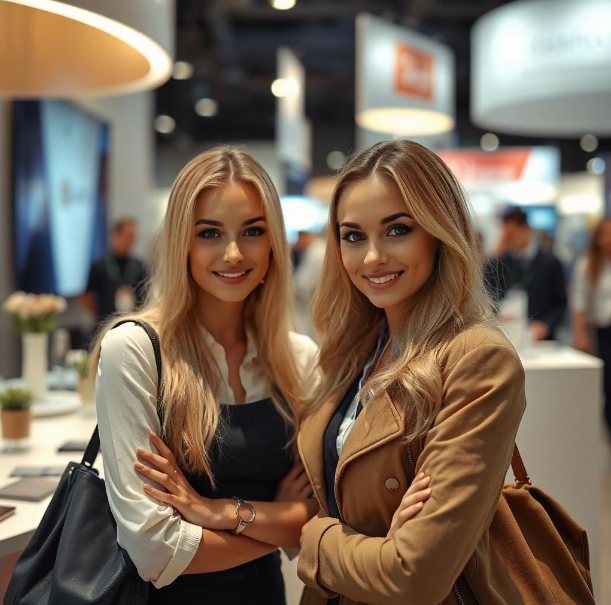
Artigiano in Fiera is unlike any other trade fair in Italy. When the doors open at Fieramilano Rho every December, the exhibition halls transform into a vast celebration of global craftsmanship, drawing over one million visitors across nine days. With 2,800 exhibitors from 90 countries and more than 15,000 staff working the stands, the event is as much a cultural festival as it is a commercial marketplace.
For artisans and small businesses exhibiting here, the front-line team — interpreters, booth assistants, hostesses, and models — plays a distinctive role that differs from purely B2B trade shows. At Artigiano in Fiera, exhibitors sell directly to the public, tell their stories, and build relationships with a discerning audience that returns year after year. The people representing each stand are not merely staffing a booth; they are embodying the authenticity and craft tradition that the fair is built upon.
The Specific Demands of Artigiano in Fiera
Artigiano in Fiera attracts a broad public audience with high spending capacity and a genuine interest in authentic, original, and quality products. Visitors come to discover, to buy, and to experience the cultures behind the objects on display. The fair describes itself as a place where artisans can present their products, tell their story, and talk about their work, celebrating the culture and traditions of their local territory.
This environment demands a different caliber of front-line staff than a standard industrial exhibition. A booth assistant at Artigiano in Fiera must be able to engage with families, tourists, design enthusiasts, and serious buyers — often within the same hour. They need warmth, patience, and the ability to communicate the story behind a product, not just its specifications. Because the fair runs from 10:00 to 22:00 every day, stamina and consistency are essential.
What Exhibitors Are Actually Hiring For
The practical scope of these roles at Italian trade fairs is well documented. Professional hostess and booth assistant services cover a range of functions: welcoming visitors, starting conversations, introducing the company and its products, guiding people to scan QR codes and collect contact details, handing out materials, and keeping the booth tidy during breaks and meetings. At Artigiano in Fiera, where direct sales are central, assistants may also help with product demonstrations, wrapping purchases, and managing the flow of visitors during peak hours.
Many exhibitors at Artigiano in Fiera are small artisans who may not have extensive experience with international trade fairs. The fair’s organizer emphasizes supporting businesses that prioritize human capital, territory, and tradition. For these exhibitors, professional booth staff can bridge the gap between artisanal authenticity and the practical demands of a high-traffic, nine-day commercial event.
Interpreters as Cultural Bridges
Artigiano in Fiera is genuinely international. The 30th edition featured exhibitors from 90 countries across five continents. While Italian is the primary language of the fair and its visitors, many exhibitors arrive from abroad without Italian language skills. French, Spanish, Portuguese, Arabic, and English are common among the artisan communities represented.
The Italian Trade Agency and regional chambers of commerce explicitly offer interpretation and translation support to exhibitors participating in collective stands. For individual artisans, however, the responsibility often falls to their own hired staff. A multilingual interpreter at Artigiano in Fiera does more than translate — they help explain the cultural context of a product, negotiate prices with international visitors, and ensure that the artisan’s story is communicated accurately across language barriers.
Models and Brand Ambassadors: Craft as Image
The term “model” in the context of Artigiano in Fiera carries a meaning specific to this event. Artigiano in Fiera is not simply a marketplace; it is a celebration of craft identity, where the artisan’s personal story and territory are central to the value proposition. Models and image representatives at this fair function as visual and communicative ambassadors for that identity.
For regional collectives — such as the 250 exhibitors from Lombardy or the 230 from Calabria — having staff who can represent the region’s cultural heritage while managing commercial interactions is valuable. The selection criteria emphasize presentation, communication ability, and an authentic connection to the products and traditions being showcased.
Why This Support Function Matters
Artigiano in Fiera is an intense commercial environment. Over nine consecutive days, exhibitors face sustained foot traffic from a public audience that expects both quality products and a meaningful experience. The fair’s “phygital” model connects the physical event with a digital community of 1.7 million registered members, extending engagement beyond the exhibition dates.
In this context, the first interaction a visitor has at a stand matters enormously. A knowledgeable hostess who can immediately identify whether a visitor is a serious buyer, a tourist browsing, or a potential wholesale contact saves time and directs energy appropriately. A multilingual interpreter who can help close a sale with a foreign visitor creates immediate commercial value. A booth assistant who keeps the stand organized, manages crowds, and ensures that the artisan can focus on high-value conversations contributes directly to the exhibitor’s bottom line.
Practical Considerations for Exhibitors
For artisans planning their Artigiano in Fiera presence, staffing decisions should reflect the fair’s unique character. The event is free to enter and open to the public, which means visitor flows are less predictable than at invitation-only trade shows. High-traffic periods, particularly weekends and the days surrounding Italian public holidays, require additional support.
Agencies specializing in Italian trade fair staffing recommend early booking for multilingual personnel, who are in highest demand. The continuous 12-hour daily schedule — from 10:00 to 22:00 across nine days — demands a rotation strategy to prevent fatigue from degrading the quality of interactions. Proper briefing is essential: staff should understand the artisan’s products, the story behind them, and the desired tone for visitor engagement before the fair begins.
For exhibitors, the investment in professional booth staffing should be viewed as a component of the overall commercial strategy. At an event where over one million visitors walk through the halls, the personnel who represent each stand are not a decorative addition — they are the human face of the craft tradition that Artigiano in Fiera exists to celebrate.