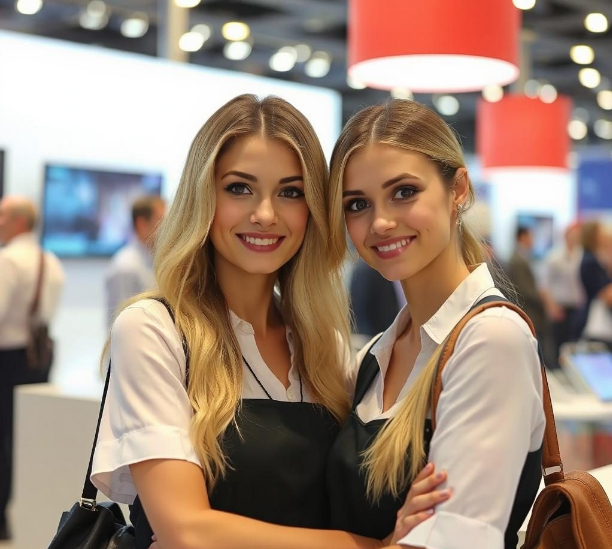
Crocus Expo International Exhibition Centre stands as one of the largest and most modern exhibition venues in the world, meeting international standards of the expo industry and equipped with advanced infrastructure. Located just outside Moscow’s MKAD ring road, the complex hosts a continuous calendar of major international trade shows, from InterCHARM and PIR Expo to Elektro, Weldex, and RosUpack. Behind every successful stand at these events is a specialized team: interpreters, booth assistants, hostesses, and models. Their role is often underestimated, yet they frequently determine whether a visitor stops to engage or walks past a carefully designed exhibition space.
The Specific Demands of Crocus Expo
Crocus Expo is not a single event but a vast ecosystem of trade shows spanning multiple industries. The 2026 calendar alone includes events such as InterCHARM (beauty and cosmetics), PIR Expo (hospitality industry), Elektro (electrical equipment and automation), Weldex (welding technologies), FlowersExpo, and RosUpack (packaging industry). Each event brings its own audience, language requirements, and commercial expectations.
The international composition of Crocus Expo exhibitions is significant. Elektro 2025 alone drew 14,850 visitors from 26 countries, with 349 companies from six nations exhibiting. Exhibitors from China, Turkey, India, Belarus, and Kazakhstan regularly participate, making multilingual support a practical necessity rather than a luxury.
What Exhibitors Are Actually Hiring For
The practical scope of these roles at Russian trade fairs has been well documented through official service guides and industry practice. Crocus Expo itself provides professional personnel services including interpreters, security guards, and cloakroom attendants during events.
Industry experience reveals that booth assistants at Crocus Expo perform a range of duties that extend far beyond smiling and greeting. Job postings for exhibition assistants describe responsibilities including meeting contractors, accepting deliveries, distributing heavy product samples, managing coffee-break zones, monitoring food supplies, policing the zone for unauthorized distributors, and maintaining general order. This “all-in-one” nature means a Russian booth assistant often acts as hostess, cleaner, logistics coordinator, and security monitor simultaneously.
External staffing agencies serving Crocus Expo list distinct professional categories: models and hostesses fluent in English to greet guests, interpreters as technical specialists for negotiations, and sales assistants trained to present products. A case study from PIR Expo at Crocus Expo showed promotional staff actively engaging visitors in branded costumes, distributing materials, and inviting guests to explore the exhibition zone.
Interpreters as Business Enablers
The role of interpreters at Crocus Expo trade shows differs significantly from that of hostesses. While hostesses focus on hospitality—greeting visitors, managing traffic, offering samples, and handling basic registration—interpreters serve as strategic partners facilitating the technical conversations that lead to sales.
In the Russian B2B environment, relationships are paramount, and deals rarely close on the first handshake. A professional interpreter understands the cultural subtext of Russian negotiations and can phrase objections diplomatically, allowing the sales representative to respond without losing face. For technical industries represented at Crocus Expo events—electrical equipment, welding technology, packaging machinery—interpreters must prepare glossaries in advance to ensure that terms like “blast chiller,” “frequency converter,” or “import substitution ingredients” are translated with complete accuracy.
The demand for qualified interpreters at Crocus Expo is particularly acute during major events. Industry guidance recommends booking English-Russian interpreters well in advance, as high-quality professionals are in high demand during peak exhibition periods. Interpreters are also provided through Crocus Expo’s official personnel services, with pricing structured by language category.
Hostesses and Models: Brand Representation
Russian exhibition culture places high value on presentation and professionalism. The standard for hostesses and models at Crocus Expo combines functional elegance with brand alignment. While business attire is expected, practicality is also valued—comfortable shoes and branded polo shirts are standard for booth staff, with custom corporate wear for hostesses representing the brand.
For industries like beauty and cosmetics, fashion, and consumer goods, models and image representatives play a distinct role. At InterCHARM, the largest beauty exhibition in Russia and CIS, the visual presentation of brands and products is central to exhibitor strategy. Hostesses and models at such events function as brand ambassadors, embodying the quality and aesthetic appeal that partners and buyers expect.
Staffing agencies serving Crocus Expo emphasize that models and hostesses for Russian exhibitions are selected for communication ability and professional presentation, not merely appearance. The Russian approach to work is described as direct, punctual, efficient, and solution-oriented.
Why This Support Function Matters
Crocus Expo’s scale—multiple pavilions connected by enclosed walkways, thousands of exhibitors across dozens of simultaneous events—creates a challenging environment for visitor engagement. In this context, the first interaction a visitor has at a stand carries disproportionate weight.
A knowledgeable hostess who can immediately identify whether a visitor is a serious buyer, a distributor, or a journalist saves everyone time. A multilingual interpreter who can facilitate a spontaneous meeting with a walk-in partner from a target market creates value that no amount of pre-scheduled appointments can replicate. A booth assistant who captures complete contact details and follows up post-show converts a passing curiosity into a qualified lead.
For international exhibitors, local staff also bridge critical gaps. While many Russian buyers in Moscow speak some English, they conduct business in Russian. A local booth assistant ensures seamless communication, de-escalates misunderstandings that machine translation might miss, and builds the trust necessary for B2B deals in the Russian market. Local staff also navigate the bureaucracy and logistics of exhibiting in Russia, from coordinating deliveries to managing relationships with venue-provided electricians and plumbers.
Practical Considerations for Exhibitors
For companies planning their Crocus Expo presence, staffing decisions should begin as early as stand design. The size of the exhibition space, the number of meeting areas, the languages represented among target partners, and the intended daily flow of visitors all inform how many hostesses, interpreters, and support staff are required.
Agencies specializing in Russian trade fair staffing recommend early booking, particularly for multilingual personnel who are in highest demand during major exhibition periods. Proper briefing is essential: staff should receive clear instructions about the exhibitor’s products, target audience, and desired tone before the event begins. For interpreters, this means reviewing technical specifications and preparing glossaries. For hostesses, it means understanding the brand identity and the specific roles expected.
Shift rotation is another practical consideration. Interpreting is mentally exhausting, and hostesses face sustained public engagement across long exhibition days. Scheduling personnel to rotate every 60 to 90 minutes prevents fatigue from degrading the quality of interactions.
For exhibitors, the investment in professional booth staffing at Crocus Expo should be viewed as a component of the overall commercial strategy. At a venue where a single new partnership can justify the entire cost of participation, the personnel who make those connections possible are not a luxury—they are essential infrastructure.