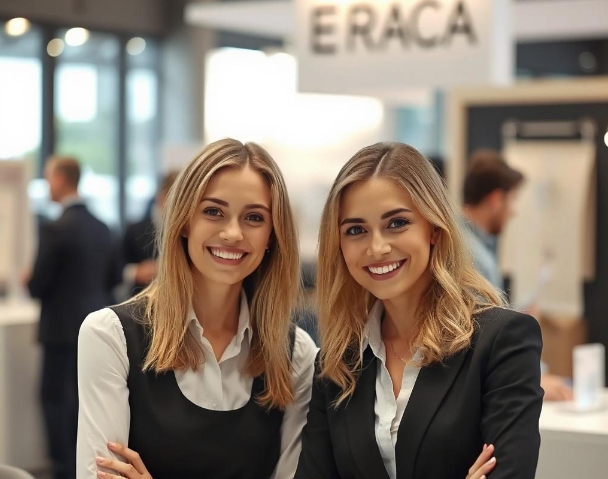
The workboat industry is a practical one. It is about vessels that tow, push, dredge, survey, and supply — boats built to do hard jobs in demanding conditions. SEAWORK ASIA 2027, the region’s premier commercial marine and workboat exhibition, will gather naval architects, boatbuilders, engine manufacturers, equipment suppliers, and fleet operators for a showcase of marine engineering at its most utilitarian. Yet even in an industry defined by steel, diesel, and saltwater, the success of an exhibitor’s stand will depend on something far less mechanical: the people who staff it. Interpreters, booth assistants, models, and hostesses are the human face of SEAWORK ASIA 2027, and their professionalism will shape every visitor’s experience.
Interpreters: Fluent in the Language of Commercial Marine
The commercial marine sector has a vocabulary all its own. Conversations at SEAWORK ASIA 2027 will touch on bollard pull and vessel stability, classification and flag state requirements, IMO conventions, engine duty ratings, propeller selection, deck equipment capacities, and crew certification. A general interpreter, however capable, will quickly find the ground shifting beneath them.
The interpreters who add genuine value at this show will be selected for their familiarity with maritime and workboat terminology and briefed thoroughly on exhibitor portfolios in advance. When a Chinese boatbuilder explains build slots and delivery schedules to a Southeast Asian fleet operator, or a European equipment manufacturer discusses service intervals with a port authority, the interpreter must convey both technical detail and commercial nuance with precision. In an industry where safety and compliance govern every decision, a misunderstood regulation or misstated capacity figure can undermine confidence in an entire organization.
Equally important is cultural fluency. Workboat business runs on long-term relationships, and negotiation styles differ significantly across the region. An interpreter who understands both the language and the business culture helps exhibitors and buyers reach agreement faster — and many lasting partnerships in this industry have begun with a conversation an interpreter made possible.
Booth Assistants: The Operational Backbone
A workboat exhibition stand is a busy, technical environment. Scale models of vessels, cutaway engines, deck machinery displays, and interactive presentations all compete for attention while senior engineers and sales directors meet with clients. Booth assistants are the operational backbone that keeps everything running.
At SEAWORK ASIA 2027, their responsibilities will include visitor registration and badge scanning, managing queues for demonstrations, distributing brochures and technical literature, coordinating meeting schedules, and keeping the stand presentable through long exhibition days. Crucially, they will qualify visitors — distinguishing vessel owners and fleet managers from naval architects, port authorities, distributors, and students — and route each to the appropriate specialist. This triage function protects the time of senior staff and ensures that high-value conversations are not lost in the crowd.
The best booth assistants also absorb product and company knowledge. When a visitor asks about a vessel’s bollard pull, an engine’s power rating, or a service network, an assistant who can offer a confident preliminary answer keeps the conversation alive and creates an impression of organizational competence. Multiplied across hundreds of interactions over several days, that responsiveness directly shapes an exhibitor’s results.
Models: Making Scale and Usability Visible
Much of what is displayed at a workboat exhibition exists as scale models, mockups, and interactive exhibits. Models — the human kind — play a distinctive role in making this technology accessible.
A model standing beside a scale vessel or interacting with a bridge simulator helps visitors grasp scale and function. A model demonstrating a control station, a deck equipment setup, or a crew accommodation mockup communicates ergonomics and usability in a way that photographs cannot — and in the working boat sector, human factors matter. Crews spend long shifts aboard; bridge layouts, engine rooms, and accommodation spaces are all designed around people. Professional models also draw crowds and create photogenic moments, generating social media content and press coverage that extends an exhibitor’s reach beyond the exhibition hall.
For exhibitors launching new vessel designs, propulsion concepts, or equipment lines, professional models add a layer of polish that signals market confidence. In a hall filled with competing stands, that visual energy helps convert passing foot traffic into engaged visitors.
Hostesses: Hospitality in a Relationship-Driven Sector
Commercial marine business runs on relationships, and much of the real work at SEAWORK ASIA 2027 will happen not on the show floor but in meeting rooms, hospitality suites, and evening receptions. Hostesses are the custodians of that environment.
Their responsibilities include welcoming guests at reception areas, guiding VIP owners and delegations to meeting rooms, managing appointment schedules, coordinating refreshments, and ensuring hospitality areas remain impeccable. They handle the small courtesies that carry real weight: greeting a delegation promptly on arrival, remembering a returning client’s preferences, resolving a scheduling clash with calm efficiency. In the Chinese business context, hospitality is closely linked to respect, and a well-run reception signals that an exhibitor takes its relationships seriously.
For international visitors traveling long distances to attend, a gracious welcome creates a moment of ease — and ease is the precondition for productive negotiation. Hostesses are therefore not peripheral to the commercial process; they are often the first and most memorable human impression of the brand.
Why Professional Support Staff Are Worth the Investment
Exhibiting at a major international marine show demands substantial investment: stand design, logistics, travel, marketing, and the time of senior technical staff. Economizing on frontline support is a false saving.
Professional staff arrive trained and prepared, requiring minimal supervision and adapting smoothly to the pressures of a busy show. They protect brand image at every interaction. They capture and qualify leads systematically, making post-show follow-up more efficient. And they bridge linguistic and cultural divides, helping exhibitors and visitors communicate with confidence.
In commercial marine, where exhibitors compete for the attention of the same global owners and operators, the human experience on the stand can be decisive. Two exhibitors may offer comparable technology; the one whose staff communicate more clearly, welcome more warmly, and organize more efficiently will win the relationship.
SEAWORK ASIA 2027 will be a showcase of remarkable engineering — vessels that work harder, equipment that performs more reliably, systems that run more efficiently. But trade shows are, at their core, meetings between people. The interpreters who translate technical precision, the booth assistants who keep the stand running, the models who bring scale and usability to life, and the hostesses who make every visitor feel welcome — these professionals transform a display of equipment into a genuine business conversation. Exhibitors who invest in them will find their technology not merely seen, but understood, remembered, and chosen.