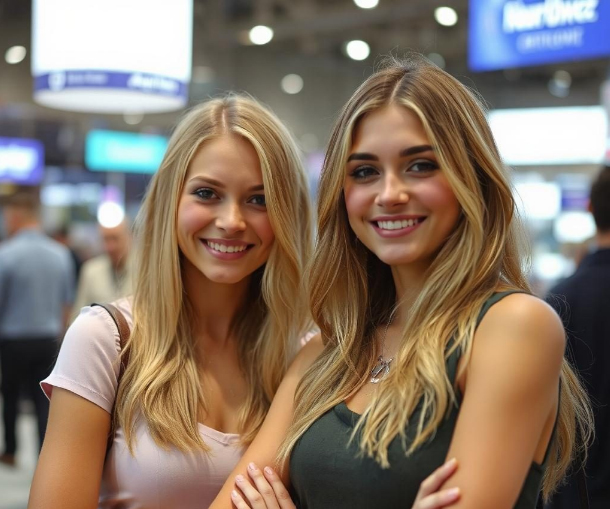
When the global tourism industry gathers at Fiera Milano Rho for BIT — Borsa Internazionale del Turismo — the exhibition halls become a vibrant landscape of destination presentations, business meetings, and professional networking. Amidst the carefully designed stands and promotional displays, a specialized workforce operates at the frontlines of every exhibitor’s space: hostesses, models, interpreters, and booth assistants. Their role is often overlooked, yet they frequently determine whether a visitor stops to engage or walks past a multi-million-euro exhibition space.
The Specific Demands of a Tourism Trade Show
BIT is not a consumer travel fair. The attendees are tour operators, destination management companies, hotel group representatives, luxury travel advisors, and hosted buyers from around the world. The 46th edition brought together over 1,000 exhibitors from 54 countries, with more than 39% arriving from outside Italy. Conversations at a typical stand involve destination product presentations, itinerary customization, B2B partnership terms, and sustainable tourism solutions.
This environment demands a caliber of front-line staff that differs from general consumer exhibitions. Exhibitors require personnel who can navigate the language of tourism while maintaining the polish and hospitality expected at an international B2B gathering. The ideal booth assistant at BIT must grasp enough product knowledge to distinguish whether a visitor is a tour operator evaluating a destination, a luxury travel designer seeking exclusive experiences, or a media representative, and route them accordingly.
What Exhibitors Are Actually Hiring For
The practical scope of these roles at Italian trade fairs is well documented. Professional hostess and steward services cover a range of functions: visitor reception and accreditation, stand support and visitor management, distribution of brochures and promotional materials, and lead collection. This description captures the hybrid nature of the modern booth assistant: part receptionist, part lead-generation specialist, part operational support.
According to Italian vocational standards for event reception personnel, the core tasks include providing participants with organizational and logistical information, managing relationships with suppliers, guests, and visitors, and ensuring smooth operations during the event. For BIT specifically, hostesses often assist with tourism information inquiries and guide visitors toward relevant exhibitors or conference sessions.
Interpreters as Business Enablers
The international composition of BIT makes interpretation services critical rather than optional. The 2026 edition attracted hosted buyers from over 50 countries, with 52% from Europe, 22% from the Americas, 16% from Asia, and 10% from the Middle East and Africa. Italian and English are the primary working languages, but participants from China, Brazil, Japan, and the UAE have genuine needs for native-language support.
In the Italian trade fair context, the role of interpreters is nuanced. Stand interpreters primarily handle hostess duties at an information counter, with occasional consecutive interpreting when connecting visitors with exhibitors, rather than full negotiation support. For BIT exhibitors, an interpreter who can fluently present destination products in Mandarin or Portuguese while accurately conveying partnership intentions can transform a superficial booth interaction into a substantive business discussion.
Models and Brand Ambassadors: Destination Representation
The term “model” in the context of tourism trade shows carries a different connotation than in consumer fashion or automotive exhibitions. At events like BIT, models function as brand ambassadors selected for presentation, communication skills, and the ability to project a professional image that aligns with the destination’s identity. Their role is representational rather than decorative — embodying the quality and experiential promise that tourism partners expect.
Agencies serving tourism trade fairs across Europe emphasize that models for travel events are chosen for their capacity to engage visitors intelligently and represent destinations authentically, not merely to attract foot traffic. For national tourism boards and luxury hotel groups exhibiting at BIT, the selection criteria emphasize communication ability, linguistic competence, and the capacity to inspire travel interest.
Why This Support Function Matters More Than Ever
BIT 2026 introduced a renewed concept centered on “Travel Makers” — a cross-sector community of operators, destinations, professionals, storytellers, and content creators who design, narrate, and experience travel as an authentic and meaningful journey. The exhibition was structured around six thematic districts: Italy, World, Travel Expert, Hospitality, Transportation, and Innovation, with over 200 events including talks, panels, and workshops.
In this more fragmented, content-driven environment, the first thirty seconds a visitor experiences at a stand carry disproportionate weight. A knowledgeable hostess who can immediately identify whether a visitor needs to speak with the destination representative, the hotel partner, or the technology provider saves everyone time. A multilingual interpreter who can facilitate a spontaneous meeting with a walk-in buyer from a target market creates value that no amount of pre-scheduled appointments can replicate. A booth assistant who captures complete contact details and follows up post-show converts a passing curiosity into a qualified lead.
Practical Considerations for Exhibitors
For companies planning their BIT presence, staffing decisions should begin as early as stand design. The size of the stand, the number of meeting areas, the languages represented among target partners, and the intended daily flow of visitors all inform how many hostesses, interpreters, and support staff are required.
Agencies specializing in Italian trade fair staffing recommend booking four to six weeks in advance, particularly for multilingual personnel who are in highest demand. The three-day show schedule — typically running from morning through late afternoon — demands stamina and consistency from front-line staff. Rotating personnel across shifts prevents fatigue from degrading the quality of interactions, especially on the final afternoon when energy typically flags. Proper briefing is essential: staff should receive clear instructions about the exhibitor’s products, target audience, and desired tone before the event begins.
For exhibitors, the investment in professional booth staffing should be viewed not as overhead but as a component of the overall commercial strategy. At a show where a single new partnership can justify the entire cost of participation, the personnel who make those connections possible are not a luxury — they are essential infrastructure.