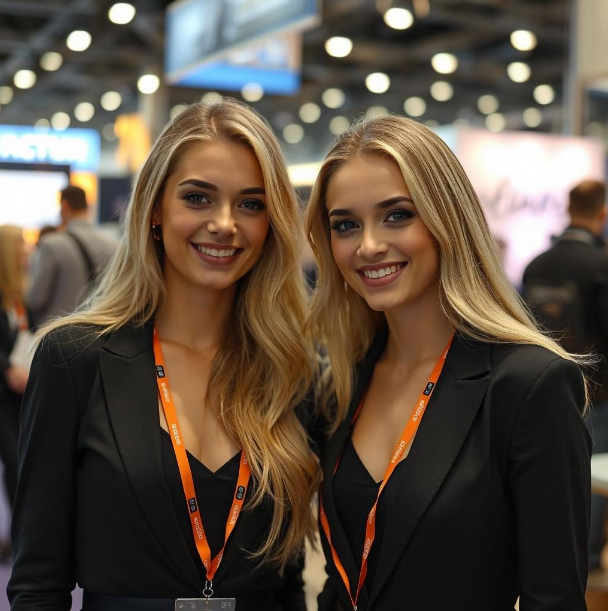
The Professional Workforce Behind Russia’s Largest Autumn Food Exhibition
WorldFood Moscow, the largest international autumn food and drink exhibition in Russia, stands as the premier meeting place for food market leaders from across Eurasia. The 35th anniversary edition, held from 15 to 18 September 2026 at Crocus Expo in Moscow, brought together 873 manufacturers and suppliers from 30 countries and more than 50 Russian regions. With 14 national pavilions representing countries from Brazil and Vietnam to China, Turkey, and South Korea, and over 21,800 professional visitors from 76 countries and 86 Russian regions, WorldFood Moscow serves as the central platform for the food industry’s key players.
The exhibition covers 16 thematic sections spanning the full spectrum of food products—from groceries, dairy, meat, and confectionery to beverages, ingredients, and non-food products for retail. A particularly distinctive feature is the fresh fruits and vegetables section, presented on a scale that has no analogue among Russian exhibitions due to the autumn timing.
While the exhibitors and their products occupy the centre stage, a specialised workforce of booth assistants, hostesses, models, and interpreters works behind the scenes to ensure that the event functions smoothly and that business communication flows without interruption.
Interpreters: Enabling Cross-Border Communication
At an exhibition where 14 national pavilions bring together companies from Brazil, Vietnam, Egypt, India, Indonesia, China, Kyrgyzstan, UAE, Oman, Thailand, Tunisia, Turkey, Uzbekistan, and South Korea, interpreters are indispensable. The diverse international presence creates a constant demand for language mediation across the exhibition halls.
Interpreters at WorldFood Moscow work in various capacities. Consecutive interpreters accompany foreign exhibitors during negotiations with Russian retail chains, distributors, wholesalers, and HoReCa procurement specialists. They must be fluent not only in general business language but also in the specialised terminology of the food industry—product categories, certification requirements, labeling regulations, shelf-life standards, and logistics conditions. A conversation about halal certification, organic product compliance, or private label production requires an interpreter who understands the regulatory and commercial context, not merely the words.
The business significance of interpretation at WorldFood Moscow cannot be overstated. When a Turkish dried fruit supplier negotiates with a Russian retail chain, or when a Chinese ingredient manufacturer discusses terms with a food processing company, the negotiation process depends on clear, precise communication. The Centre for Retail Procurement facilitated 3,803 negotiation sessions in 2026, with 2,901 concluding in preliminary contracts worth 117 billion rubles—a 22% increase over the previous year. An interpreter’s ability to convey product specifications, delivery terms, and pricing conditions accurately can determine whether a deal is concluded or lost.
Documented evidence from the exhibition illustrates the practical demand for interpretation. The Turkish Exporters Assembly (TİM) maintained a shared stand under the Türkiye Food Exporters brand, and the list of business cards collected at this stand shows inquiries from Russian, Saudi Arabian, and Belarusian companies seeking sunflower oil, pasta, legumes, coffee, and other products. Each of these cross-border conversations required language mediation to proceed effectively.
Booth Assistants: The Operational Core of Exhibition Stands
Booth assistants form the operational backbone of exhibitor stands at WorldFood Moscow. Their role combines reception duties, product knowledge, and logistical support, making them essential to the smooth functioning of each exhibition space.
A typical booth assistant at WorldFood Moscow is responsible for greeting visitors, managing the flow of attendees at the stand, distributing product samples and catalogues, and supporting the sales team in identifying serious business prospects. With the exhibition covering 16 product sections across Halls 14 and 15 of Pavilion 3, booth assistants must be prepared to engage with a diverse professional audience including wholesale representatives (31% of visitors), retail buyers (18%), food producers (16%), and public catering specialists (7%).
The tasting dimension of WorldFood Moscow adds a distinctive element to the booth assistant role. With the Culinary Marathon offering tasting sessions and the Product of the Year competition recognizing quality, booth assistants often facilitate sampling and product presentations that require careful coordination and hygiene awareness. They must manage sample distribution, explain product origins and ingredients, and collect visitor feedback—all while maintaining the professional standards expected of an international trade exhibition.
For international exhibitors, booth assistants often serve a dual function, combining reception duties with interpretation. A Turkish confectionery manufacturer or a Chinese tea producer may rely on a bilingual booth assistant to handle initial inquiries from Russian visitors, explain product specifications, and collect contact information for follow-up. This requires not only language skills but also a working understanding of the exhibitor’s product range and the Russian food market context.
The physical demands of booth work at a four-day exhibition are considerable. Assistants stand for extended periods, manage crowds during peak hours, and maintain a professional demeanour throughout. Crocus Expo’s Pavilion 3, with its two large halls hosting the exhibition, requires assistants to navigate the venue efficiently and remain alert across long working days.
Hostesses: From Greeters to Strategic Brand Ambassadors
The role of hostesses at WorldFood Moscow has evolved considerably from simple greeting duties. In an exhibition environment where visitors include category buyers from major retail chains such as X5 Group, Magnit, VkusVill, Lenta, Auchan, Metro, and Wildberries, the modern hostess functions as a brand ambassador and a critical component in a company’s lead generation efforts.
At WorldFood Moscow, hostesses serve as the first point of contact for visitors, acting as an initial filter who greets attendees and quickly assesses their role and interest level. Is this a curious student, or a high-potential category manager from a federal retail chain? By qualifying visitors through predefined questions, hostesses ensure that technical staff time is optimised for maximum return on investment.
Their responsibilities extend beyond welcoming. Hostesses manage the flow of visitors, schedule meetings, coordinate product tastings, and capture lead data accurately using tablets and CRM tools. The exhibition’s WorldFood Connect digital platform, which includes lead scanning and matchmaking features, means that hostesses must be familiar with digital tools for capturing and transmitting visitor interest data. In an industry built on food safety, quality standards, and supply chain reliability, the hostess projects an image of organised, professional efficiency, making the company appear as well-managed as its products.
The WorldFood Moscow hostess must also possess product literacy. While not expected to be food technologists, top-tier ambassadors are thoroughly briefed on the company’s products and services. They understand key messaging, can identify a qualified lead based on a visitor’s questions, and know exactly which specialist on the team to introduce them to. They can articulate the value proposition of organic certification, halal compliance, private label capabilities, or innovative packaging solutions with confidence.
The role also requires cultural and linguistic competence. A skilled hostess is often fluent in both Russian and English, and sometimes Turkish, Chinese, or Arabic given the significant participation from those countries. They can seamlessly greet a delegation from a Russian regional producer, converse with executives from Turkey or the UAE, and explain product details to buyers from Uzbekistan or South Korea, all while navigating subtle cultural formalities and dietary requirements including halal and organic preferences.
Models: Presentation Beyond Aesthetics
Models at WorldFood Moscow serve a functional role that extends beyond visual appeal. In the context of a food and beverage exhibition, models may be engaged for product presentations, tasting demonstrations, and promotional activities that require a polished, professional presence.
Exhibitors showcasing premium food products, innovative packaging, or consumer-oriented brands may use models to create visually compelling presentations that attract visitor attention. The exhibition’s emphasis on new product launches—with the “Product Launch of the Year” competition highlighting the most innovative food and beverage products recently introduced to the market—means that well-presented demonstrations can be a significant draw for retail buyers seeking to refresh their assortments.
The distinction between models and hostesses at industry exhibitions can be subtle. Models may focus more on visual presentation and promotional engagement, while hostesses typically handle informational and logistical tasks. In practice, individuals working in these roles often possess overlapping skills, and the boundaries between them may shift depending on the needs of the exhibitor and the dynamics of the event.
For WorldFood Moscow specifically, models might be engaged by companies presenting premium confectionery, specialty beverages, or innovative ready-to-eat products. The exhibition’s Culinary Marathon Zone, where chefs prepare dishes using participants’ products and offer tasting sessions, creates opportunities for exhibitors to use models in presentations that combine visual appeal with sensory experience.
A Collaborative Professional Ecosystem
What unites booth assistants, hostesses, models, and interpreters at WorldFood Moscow is their shared function as facilitators of communication, experience, and business interaction. The exhibition’s stated purpose is to serve as a comprehensive platform for food industry professionals—helping producers find new clients, expand sales geography, realise export potential, and present new products, while helping retailers, wholesalers, and HoReCa enterprises find new suppliers and negotiate favourable supply terms. The quality of the support workforce directly influences how effectively these objectives are achieved.
WorldFood Moscow has maintained its status as Eurasia’s leading international food and beverage exhibition for 35 years, since 1991. The 2026 edition confirmed its scale with 873 exhibitors from 30 countries, over 400 new companies participating for the first time, and preliminary contracts worth 117 billion rubles concluded through the Centre for Retail Procurement. The exhibition operates under the support of the Russian Ministry of Agriculture, the Ministry of Industry and Trade, the Moscow Government, and industry associations. That institutional weight and commercial impact depend not only on the exhibitors and their products but also on the professional infrastructure that makes the event navigable, accessible, and productive for all participants.
The modern WorldFood Moscow brand ambassador—whether called booth assistant, hostess, model, or interpreter—is a strategic investment. They are the human face of a food brand, the friendly guide in a vast sea of product offerings, and the critical first connection that can lead to significant business partnerships. In the competitive world of Moscow’s food industry exhibitions, where major supply contracts are negotiated and retail assortments are shaped, these professionals are the human connection that illuminates the path to new business.