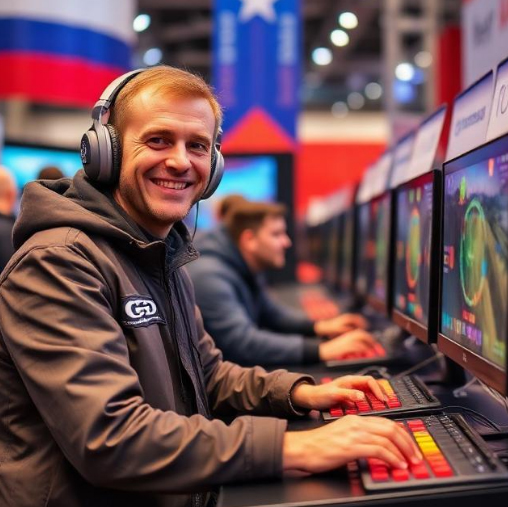
The Russian video game industry is a sector of striking contradictions. It has weathered the storm of sanctions, payment freezes, and the departure of Western platforms, emerging not merely intact but with a growing economic footprint. Defined by record consumer spending, the rise of domestic distribution channels, and a distinctive pivot toward national cultural themes, the industry is rebuilding itself on the principles of resilience, innovation, and strategic ambition.
A Market of Record Scale
By any financial metric, 2025 was a landmark year. Total consumer spending on video games, subscriptions, and in-game purchases exceeded 200 billion rubles (approximately $2.3 billion), a significant jump from 173 billion rubles in 2024. By another estimate, the combined user spending figure reached 175 billion rubles. This represents a 12.9% increase in user spending over the last three years.
The market structure remains dominated by the PC segment, which accounts for approximately 115 billion rubles, followed by mobile games at 60 billion rubles and browser games contributing 25 billion rubles. Despite this growth, Russia’s share of the global games market remains modest at roughly 2-3%. However, analysts project further growth to 261 billion rubles by 2030.
The average paying gamer spends about 5,100 to 7,000 rubles per year. Interestingly, spending is not confined to Moscow. Residents of Krasnoyarsk, for example, outspend Muscovites, averaging 7,200 rubles compared to the capital’s 6,450 rubles.
The Pivot to Domestic Platforms
The departure of major Western platforms created a void that Russian companies have rapidly filled. VK Play saw its peak monthly audience soar from 12.5 million in 2024 to 19 million in 2025, driven by the popularity of domestic projects and an expanding library of titles. The mobile store RuStore grew to 65.5 million users in 2025, positioning itself as a leading alternative to Google Play in Russia and actively courting international developers. New market participants such as the Rostelecom Games store and OnlyGames have also entered the arena, diversifying the competitive landscape. At the same time, some initiatives have struggled: SberGames, launched with significant investment, was liquidated by mid-2022 due to sanctions that made monetisation on global mobile platforms impossible.
The Indigenous Gaming Boom
The industry is experiencing a marked shift in consumer demand. The share of domestic games in Russian user spending has increased dramatically, from 16% to 49% over the past five years. This is reflected in the success of independent and small-budget projects that have achieved international recognition.
Among the notable releases of 2025 were the horror title No I’m Not a Human (500,000 copies sold on Steam), the anime-style horror MiSide (over 700,000 copies), and the shooter Vladik Brutal (60,000 copies). Strategy and tactical games also performed well, with titles like Broken Arrow and Zemsky Sobor drawing attention both domestically and globally. On the RuStore and mobile side, leaders included Tanks Blitz, The World of Domovyat, and Black Russia.
Industry experts now view the “small but heartfelt” indie sector as a key driver of growth, with studios increasingly leveraging the “cultural code” of Russian and Slavic identity to create products that resonate both domestically and with international audiences seeking novel experiences.
The Players: Lesta Games and Astrum Entertainment
The competitive landscape is consolidating around a few major players. According to revenue data for 2025, Lesta Games (known for World of Tanks and World of Warships) is the clear market leader, with revenue reaching 29 billion rubles (a 17% increase from 2024) and a net profit of 10.5 billion rubles. The second-largest player is Astrum Entertainment, with aggregate revenue of approximately 9.5 billion rubles across its legal entities. Other significant companies include BlackHub Games, Exbo, and publisher-distributor SoftClub.
Financial Hurdles: Payments and Piracy
Despite the recovery, the industry is not without structural challenges. The most persistent obstacles are the difficulties in processing international payments and the continued prevalence of piracy. Paying for foreign platforms and licences requires intermediaries, and the associated commissions can reach 15-25% of the final purchase cost.
The game development sector faces a unique “talent paradox”. While there is a shortage of experienced personnel, the skills of top managers who launch large gaming projects are currently less in demand, indicating a shift toward a more selective hiring environment. A high level of piracy continues to undermine the legal market, as Russian digital stores have yet to build a library of premium foreign releases comparable to Steam.
The Russian video game industry has proven its resilience. It has not only survived the crisis but is actively forging a new identity, moving from import substitution to the creation of original intellectual property. The next few years will be decisive in determining whether this momentum can be sustained and whether the industry can fully overcome the financial and regulatory hurdles that continue to restrain its potential.