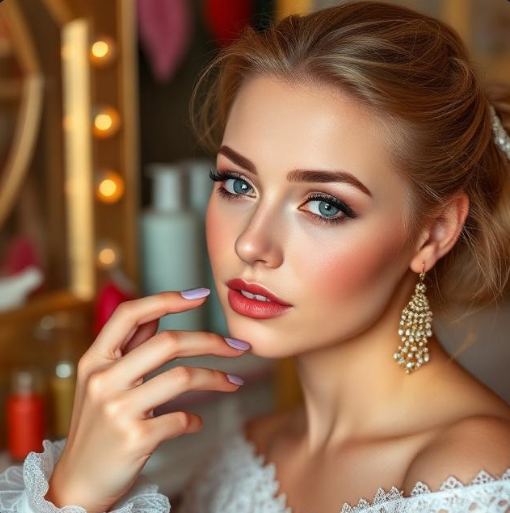
The Russian beauty market has undergone a tectonic shift over the past few years. What was once a landscape dominated by Western multinationals has transformed into a crucible of domestic innovation, Asian influence, and changing consumer habits. Today, it is a market defined by its resilience, its rapid import substitution, and the emergence of a new, confident generation of Russian beauty brands.
A Market in Numbers: The Great Substitution
The numbers tell a story of profound change. By 2025, the share of domestic cosmetics and perfume products on Russian shelves had reached approximately 65%, with projections suggesting a rise to 75% by the end of the year. This marks a dramatic reversal from just a few years prior. According to the Ministry of Industry and Trade, the share of domestic cosmetics in the market grew from 23% to 68% over just two years. In the skincare segment, domestic brands now account for nearly half of the market.
The total revenue of Russian manufacturers in 2025 surpassed 1.16 trillion rubles, with their share of the total market turnover reaching up to 80% in some estimates. The number of domestic producers has grown two to three times over three to four years, reaching roughly 4,500 companies. While this is a success story for import substitution, production capacities still remain underutilized by an average of 40-60%, indicating a market with significant untapped potential.
The New Landscape: Asian Brands and Parallel Imports
The exit of many Western brands created a vacuum that has been filled by a mix of domestic producers and a surge of imports from Asia and the Middle East. Russian consumers have shown a strong preference for brands from South Korea (45%), Turkey, the UAE, and China. These markets have seen some of the fastest revenue growth in the country, with the UAE experiencing a staggering 139% increase, Turkey 47%, China 46%, and South Korea 34% in the first ten months of 2025 compared to the same period in the previous year.
This demand is driven by perceptions of high product quality (74%), trust in the manufacturer (37%), and affordable prices (34%). The appeal is also geographically specific: Korean brands are valued for innovation and skincare science, Turkish brands for their price-performance ratio, UAE brands for their modern perfumery, and Chinese brands for advanced packaging and value-for-money.
Alongside this, the parallel import mechanism has been a crucial channel for maintaining access to some Western products. However, the Ministry of Industry and Trade has signaled that this list will be reduced in categories where significant substitution by Russian or “friendly country” manufacturers has been achieved, with cosmetics being one of the first sectors affected.
The Consumer Revolution: From Fear to Experience
The Russian beauty consumer has also evolved. There is a notable shift in behavior: while people are still willing to spend on self-care, they are doing so more consciously. Sales volume for face care and decorative cosmetics fell by 6.3% in 2025, and the number of beauty brands in the skincare and makeup category dropped by 13.3%. This is not a sign of disinterest, but of consolidation and a more selective approach.
Consumers are increasingly seeking emotional benefits from their cosmetics. A key trend highlighted at InterCHARM 2025 is the shift away from marketing that promotes a “fear of aging” and toward brands that offer support, a sense of participation, and meaningful experiences. Trends like sensorial experiences, neurocosmetics, and the use of “emotive” active ingredients are gaining ground.
The E-commerce Effect: Online Dominance
The battle for the beauty ruble is increasingly being fought online. The shift in consumer behavior toward online shopping is so pronounced that it is one of the key reasons behind the third consecutive year of decline in the number of physical cosmetics stores. In the first ten months of 2025, 2,422 new stores opened while 2,966 shut down.
Marketplaces are the primary beneficiaries of this trend. On Ozon, five out of the top ten best-selling beauty brands in the first half of 2025 were Russian, and their collective share of sales reached 40%, a 5 percentage point increase from 2023. The growth rates of Russian brands on the platform are outpacing other players by 8 percentage points. The trend is clear: consumers are moving away from traditional retail and voting with their clicks.
The Future Outlook: A Look to the East
The future of the Russian beauty industry is closely tied to the East, both as a source of inspiration and as an export destination. The industry is not just about import substitution; it’s about creating a competitive export market. Russian cosmetics are already finding buyers in the CIS countries, China, India, the Middle East, and parts of Asia and Africa. Moscow producers alone exported $2.2 billion worth of products in 2025.
The government is also playing a role in this transformation. The national project “New Materials and Chemistry” is focused on developing domestic ingredients and biotechnological solutions for cosmetics production. Furthermore, companies are exploring local, sustainable sources, with a new plant in Primorye using Far Eastern animal, plant, and marine extracts to create unique products.
The Russian beauty market has proved its resilience. It is no longer a passive market for foreign brands but a dynamic, innovative space where domestic producers are not just filling a gap but are creating a distinct identity. The revolution is not just on the shelves; it is in the very formulas and philosophies shaping the future of beauty in Russia.