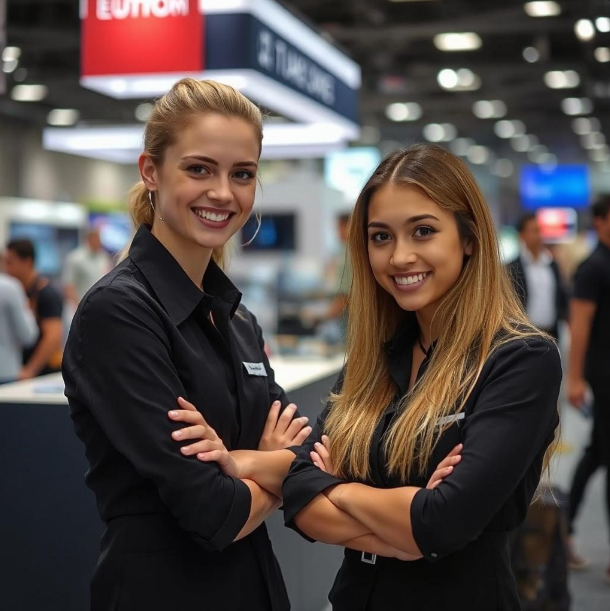
Tashkent has quietly become Central Asia’s busiest exhibition hub. With major venues like UzExpoCentre hosting back-to-back international trade fairs throughout the year, a specialized workforce has emerged to keep these events running smoothly. These are the multilingual greeters, booth support staff, registration clerks, and business facilitators who ensure that deals get made and visitors find their way.
A Venue at the Center of It All
UzExpoCentre, formally known as JSC National Exhibition Company “Uzexpocentre,” stands at 107 Amir Temur Avenue in Tashkent. The complex is difficult to miss—it occupies 44.6 hectares and includes five exhibition pavilions ranging in size from 500 to over 3,000 square meters, a conference hall with 500 seats, and the Japanese Garden. Over the past three decades, more than 1,500 exhibition events have been held in its pavilions, of which 1,200 were international specialized exhibitions.
The venue’s central location, near the “Bodomzor” metro station and a short ride from the city center, makes it accessible for both international exhibitors and local visitors. Annual events span industries from food and packaging to mining, healthcare, construction, and automotive.
Who Works the Shows
The profile of exhibition personnel in Tashkent varies considerably depending on the event and the exhibitor. At the entry level, local university students with solid English skills are frequently recruited for short-term assignments. A listing from Westminster International University in Tashkent sought students with good English knowledge for a textile machinery exhibition, offering part-time temporary work.
For international exhibitors, particularly those from China, Turkey, and Russia, the demand is for bilingual or trilingual staff who can handle business conversations, not just simple greetings. A Chinese company participating in an electronics exhibition required consecutive interpreters who could pass an online test and sign a non-disclosure agreement before working the booth. The work involved facilitating communication between the client and booth visitors, serving as what the listing called “a professional bridge for business dialogues.”
Hostess and model roles follow a distinct track. A recent job posting for exhibition work in Tashkent specified women aged 18 to 25, at least 165 centimeters tall, with polished appearance and competent speech. The listed duties included presenting companies and products, registering guests, communicating with visitors, and participating in briefings. Knowledge of Uzbek and English was welcomed, while Russian was mandatory. The pay range of 700 to 900 USD for temporary exhibition work suggests that these positions, while short-term, command competitive compensation.
The Skills That Matter
What distinguishes a successful exhibition assistant from a generic language speaker? The job listings reveal a clear pattern.
First, business etiquette matters as much as vocabulary. Employers consistently seek candidates who understand the business ethics of the region or can adapt to the specifics of doing business with Chinese, Korean, or Turkish companies. At a trade show, an assistant is not just translating words; they are facilitating trust.
Second, stamina and adaptability are essential. Exhibition days are long, booths are crowded, and conversations shift rapidly from technical specifications to pricing to logistics. Events like Aquatherm Tashkent, which brings together more than 200 companies and brands from 11 countries, demand assistants who can move fluidly between contexts.
Third, specialization commands premium rates. While general exhibition support roles may be filled by students, high-level events require interpreters with proven experience in diplomatic, governmental, or international policy settings. Professional interpreters in Tashkent list exhibition support and business negotiation services starting from approximately 35 euros per hour or 155 euros per day, with rates for technical or medical interpretation matching that level. For events requiring simultaneous interpretation or specialized industry knowledge, the rates and requirements rise accordingly.
The Business Behind the Booth
The reason this specialized workforce exists is straightforward: exhibitions have become big business in Uzbekistan. UzExpoCentre alone hosts more than 50 international exhibition events annually, with participation from over 1,000 foreign companies representing more than 40 countries. Events like UzFood, O’ZuPACK, and UzMiningExpo occupy multiple pavilions and atriums simultaneously, creating a dense calendar that sustains consistent demand for skilled exhibition personnel.
For exhibitors, the calculus is simple. A company investing in a booth, travel, and marketing materials needs someone at the front line who can engage visitors, qualify leads, and bridge language barriers. A well-briefed interpreter or hostess can mean the difference between a promising contact and a missed opportunity.
For the assistants themselves, the work offers flexibility, exposure to international business environments, and the opportunity to build a professional network. Freelancers who perform well on one assignment are often called back for the next, and agencies maintain talent pools of interpreters who can be activated when projects arise.
The Ecosystem in Practice
The trade show assistant market in Tashkent operates through a mix of established exhibition organizers and service providers. Iteca Exhibitions, which has operated in Uzbekistan since 1995, organizes events across construction, food, healthcare, oil and gas, transport, textiles, and mechanical engineering. It works with partners including ICA Eurasia Group to bring international companies to regional exhibitions.
For those interested in working at UzExpoCentre events, opportunities often flow through personal networks, agency relationships, and online platforms where short-term listings appear with varying lead times. The work is project-based by nature—a few days here, a week there—but for those with language skills, professional presentation, and the ability to think on their feet, Tashkent’s exhibition calendar offers a steady stream of engagements.