At a trade show as massive as Middle East Energy, the technology on display—from grid-scale batteries to AI-driven energy management systems—is only half the story. The other half is human. Behind every successful exhibition stand, there is a carefully assembled team of professionals whose job is to turn foot traffic into qualified leads, and conversations into contracts. For an event that draws nearly 40,000 energy professionals from over 150 countries, the roles of booth assistants, hostesses, promotional models, and interpreters are not decorative—they are operational necessities.
The Front Line: Booth Assistants and Hostesses
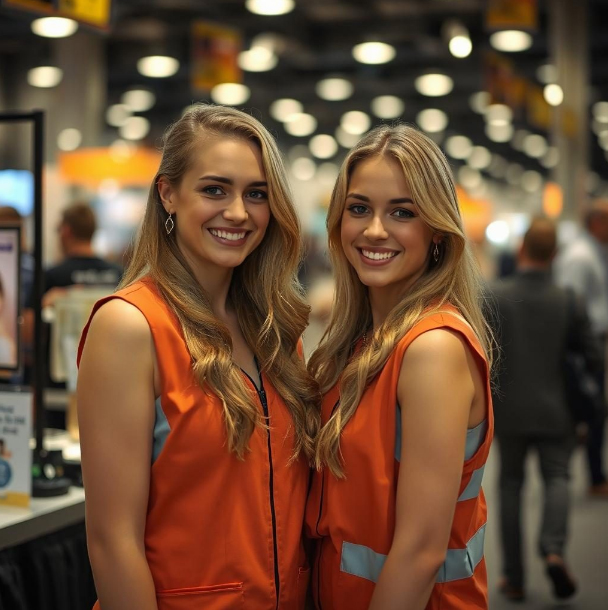
The first point of contact for most visitors is often the booth assistant or hostess. Far from being mere greeters, these professionals act as the gatekeepers of an exhibitor’s time and resources. At a show like Middle East Energy, where 1,500 companies compete for attention across multiple halls, a hostess is the human face of the brand.
Their responsibilities are extensive. They welcome visitors, manage the flow of foot traffic, distribute brochures, and collect leads. In an environment where attendees make quick judgments about a company based on the staff they encounter, the hostess sets the tone. A well-trained assistant can identify whether a visitor is a serious decision-maker or a casual browser within seconds, directing the former to technical experts and politely disengaging from the latter.
The effectiveness of this role hinges on more than a friendly smile. Industry guidance on booth staffing emphasizes a structured welcoming process: greet warmly, welcome the visitor to the company, introduce yourself, and then discover what brought them to the stand. This structured approach prevents the common trade show pitfall of passive staffing, where representatives stand idly behind a table waiting for someone to approach.
Promotional Models: Beyond the Stereotype
The use of promotional models at trade shows has long been a subject of debate. The term “booth babe” persists in industry vernacular, often reducing the role to physical appearance alone. However, the reality of professional promotional modeling is far more substantive.
A promotional model at an energy exhibition is a brand ambassador whose primary function is to drive engagement and awareness. They perform live demonstrations, explain product benefits, and create the kind of memorable interaction that static displays cannot achieve. Unlike traditional models who may never speak to a consumer, trade show models are expected to have strong verbal communication skills, memorize technical talking points, and maintain high energy levels through long hours of standing and walking.
For Middle East Energy exhibitors, particularly those launching new products in the battery storage or solar sectors, a skilled promotional model can transform a stand into a destination. They draw crowds, initiate conversations, and screen visitors before handing them off to sales engineers or technical specialists. The role demands resilience—rejection is built into the job, as most attendees will walk past any given booth without stopping. The professional’s ability to brush off disinterest and move on to the next target is what separates success from failure.
Interpreters: The Bridge for Global Business
With nearly 40,000 attendees representing 150 countries, and exhibitors from across Asia, Europe, and Africa, language barriers pose a significant threat to business outcomes at Middle East Energy. This is where interpreters become indispensable.
The modern booth interpreter is not a passive translator waiting to be summoned. Language service providers now embed interpreters directly into exhibitor teams for the duration of the show, supporting everything from casual walk-up conversations to formal B2B negotiations. The goal is to eliminate “language friction” at the moment a buyer steps onto the booth, ensuring that no qualified lead is lost simply because a sales engineer cannot communicate in the visitor’s native language.
The scope of interpretation at such an event extends beyond the booth floor. During the build-up and breakdown phases, interpreters facilitate communication between venue traffic teams and international drivers who may not speak English, keeping logistics on schedule. During the show itself, interpreters may shift between consecutive interpretation for business negotiations and whispered interpretation for technical discussions, requiring not just fluency but also subject-matter preparation in energy terminology.
Assembling the Right Team
For exhibitors preparing for Middle East Energy, the lesson is clear: booth staff are not an afterthought. Industry research confirms that the first buying decision a visitor makes is about the people, not the product. Attendees judge companies based on the professionalism, energy, and competence of the staff they encounter.
The most successful stands at the Dubai World Trade Centre will be those that deploy a complementary mix of roles. Hostesses manage the perimeter and ensure no visitor is ignored. Promotional models create the initial spark of interest. Technical staff deliver the substance. Interpreters ensure the conversation flows regardless of language. When these roles work in concert, the booth becomes more than a display—it becomes a functioning sales environment.
As Middle East Energy continues to grow as the region’s definitive energy trade show, the competition for attendee attention will only intensify. The exhibitors who understand that human connection remains the most powerful tool in their arsenal will be the ones who convert a crowded exhibition hall into a full pipeline of qualified business opportunities.