At Crocus Expo in Moscow, amidst the hum of compressors, the hiss of pneumatic valves, and the low roar of industrial air handlers, a different kind of transaction is taking place. It is not a sale, not yet—it is a conversation. An American engineer is pointing to a pressure gauge while a Russian buyer asks about seasonal energy efficiency ratios (SEER). Between them stands a professional interpreter, translating not just words, but technical specifications, legal compliance standards, and trust.
The Russian HVAC market is booming. Driven by modernization projects, extreme climate demands, and a push for energy efficiency, trade shows like Climate World and HEAT&ELECTRO have become essential battlegrounds for international suppliers. However, for non-Russian speakers, walking onto this floor without a specialized interpreter is like trying to fix a leaking boiler without a wrench—technically possible, but highly likely to end in disaster.
The “Babel” of BTUs: The Technical Chasm
HVAC is arguably one of the most linguistically complex industries to export. It is a world governed by acronyms (AHU, VRF, FCU), physics, and strict legal frameworks.
In Russia, the stakes are uniquely high. Western equipment must comply with Russian standards, specifically GOST R and SP (Building Codes), which differ significantly from ASHRAE (American) or EN (European) standards. A single mistranslation—confusing “ventilation rate” with “air change rate,” or misstating a “chiller’s kW” capacity—can result in an entire shipment being rejected at customs or a system failing its technical inspection.
One of the primary roles of a professional HVAC interpreter is to bridge this “standardization gap.” They are often required to translate technical passports, energy efficiency certificates, and installation manuals on the fly. As one industry expert notes, the goal is to avoid “million-level project loss” — that comes from a misunderstood technical clause.
Climate World vs. HEAT&ELECTRO: The Two Giants
To understand the need, one must understand the venues. Russia hosts two dominant events that require specific linguistic support:
- Climate World (Expocentre, Moscow): This is the premier international exhibition for climate control and refrigeration. It attracts a massive international crowd, including manufacturers from China, Italy, Germany, and Japan. Because of the diverse mix of languages, English-to-Russian interpreters are in high demand here, but rare language pairs (e.g., Japanese-Russian) command premium rates.
- HEAT&ELECTRO: As the leading event for heating, power supply, and electrical engineering, this show leans heavily on industrial tech. Recent editions have added “Smart Energy Solutions” zones, requiring interpreters who understand IoT and automation terminology.
The Interpreter as “Technical Sales Engineer”
At a Russian trade show, the interpreter cannot simply be a “word-for-word” robot. They must be a Subject Matter Expert (SME) .
Consider the new English-Russian Dictionary of Heating, Ventilation, Air-Conditioning and Thermophysics, which contains over 18,000 technical terms. A general translator would not know the difference between a “fan coil unit” and an “air handling unit” in Russian, nor would they understand the nuances of “sensible heat” versus “latent heat.”
Professional agencies provide interpreters with triple knowledge reserves:
- Linguistic Proficiency: Fluent technical jargon.
- Systemic Knowledge: Understanding the difference between Russian SP standards and international codes.
- Contextual Awareness: Knowing how Russian engineers typically phrase technical problems.
Navigating Russian Business Culture
Language is only half the battle. In Russia, business is personal and hierarchical. Trust is built slowly, and face-to-face communication is valued far more than an email thread.
A skilled interpreter knows that when a Russian buyer says, “This is very interesting, we will study it,” it often requires a follow-up question to determine if they mean “I love it” or “The price is too high.” Furthermore, they mediate the cultural expectation of formality. Russian business attire and decorum at shows like Climate World are traditionally formal; a “chummy” American sales pitch can fall flat. The interpreter adjusts the tone to fit the cultural norm.
Practical Advice for HVAC Exhibitors in Russia
If you are exhibiting at Climate World or HEAT&ELECTRO, keep these rules in mind:
- Pre-Read the GOST Standards: Give your interpreter the Russian regulatory documents two weeks before the show. They need to know that Russian SNiP (Construction Norms) are the law, not suggestions.
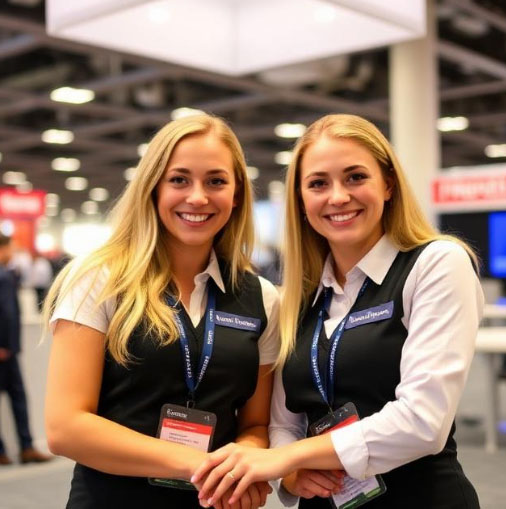
- Beware the “Booth Hostess” Trap: Many local staffing agencies offer pretty “hostesses” to stand at booths. While fine for handing out lanyards, they cannot interpret a boiler pressure test protocol. Hire a separate, dedicated technical interpreter.
- The “Third Guest” Rule: In Russian negotiations, direct confrontation is often avoided. Let your interpreter act as a buffer. They can phrase hard questions or price rejections diplomatically, allowing both parties to maintain “face.”
- Shift Management: Interpreting HVAC specs is mentally exhausting. Schedule two interpreters to rotate every 60–90 minutes. Fatigue leads to dropped decimals, and in HVAC, a dropped decimal could mean a ten-degree temperature variance.
The Russian HVAC market is a land of opportunity, but it is also a fortress of technical specificity and cultural nuance. The exhibitors who succeed are not necessarily the ones with the biggest chillers or the quietest fans; they are the ones who can clearly explain the specifications of that chiller in a way a Russian engineer trusts.
Invest in a professional technical interpreter. They are not a line item on a budget; they are the bridge between your equipment and the Russian skyline.