Automechanika Tashkent has established itself as Central Asia’s premier automotive aftermarket exhibition, bringing together hundreds of exhibitors from across the globe. Behind every successful booth and every productive business negotiation stands a team of professionals whose contributions are often overlooked but absolutely essential: interpreters, stand assistants, hostesses, and models. This article examines the roles these individuals play at the exhibition and the skills that make them invaluable to exhibitors seeking to make their mark in the Central Asian market.
The Scale and Significance of Automechanika Tashkent
The 2025 edition of Automechanika Tashkent welcomed 489 exhibitors from 15 countries and regions, drawing 20,728 visitors across 10,000 square meters of exhibition space. With a visitor satisfaction rate of 91% among exhibitors and 80% satisfied with visitor numbers, the exhibition has proven itself as a critical platform for companies entering the Uzbek and broader Central Asian automotive market. The 2026 edition, scheduled for October 21–23 at the Central Asian Expo (CAEx), promises even greater scale and opportunity.
For international exhibitors, particularly those from China, Germany, Turkey, Russia, and other nations, the challenge of communicating effectively across language barriers is substantial. This is where the supporting professionals become essential.
Interpreters: The Bridge for Business Communication
At a trade fair where automotive terminology demands precision—engine component specifications, diagnostic system capabilities, and EV charging protocols must be rendered accurately across languages—interpreters serve as the vital bridge between exhibitors and potential partners.
The linguistic demands at Automechanika Tashkent are considerable. With 61.8% of visitors coming from Uzbekistan and the remaining 38.2% from 36 other countries and regions, exhibitors encounter a diverse array of potential customers, distributors, and partners. Local interpreters typically offer exhibition support including presence at the booth alongside client staff, participation in meetings and business negotiations, and accompaniment during international events.
What distinguishes a successful trade show interpreter from a generic language speaker? Industry job listings reveal a clear pattern. Business etiquette matters as much as vocabulary. Employers consistently seek candidates who understand the specific business cultures of their target markets. At a trade show, an interpreter is not merely translating words; they are facilitating trust and ensuring that nuanced commercial discussions proceed smoothly.
Specialization commands premium rates. While general exhibition support roles may be filled by university students with solid English skills, high-level events require interpreters with proven experience in diplomatic, governmental, or international policy settings. For technical discussions involving automotive components and diagnostic equipment, interpreters with familiarity in the automotive sector prove far more effective.
Stand Assistants: The Frontline of Booth Operations
Trade show assistants in Tashkent represent a specialized workforce that has emerged to keep major exhibitions running efficiently. These are the multilingual greeters, booth support staff, registration clerks, and business facilitators who ensure that visitors find their way and that deals get made.
The profile of stand assistants varies widely depending on the event and the exhibitor. At the entry level, local university students with strong English skills are frequently recruited for short-term assignments. For international exhibitors, particularly those from China, Turkey, and Russia, the demand is for bilingual or trilingual staff who can handle business conversations, not just simple greetings.
Stamina and adaptability are essential qualities. Exhibition days are long, booths are crowded, and conversations shift rapidly from technical specifications to pricing to logistics. A capable stand assistant must move fluidly between contexts, managing visitor inquiries while maintaining the professional image of the exhibiting company.
For many exhibitors, the stand assistant serves as the first point of contact for visitors approaching the booth. In this capacity, they must quickly assess whether a visitor is a potential distributor, a service station owner, a fleet operator, or a journalist—and respond accordingly.
Hostesses and Models: The Professional Face of the Brand
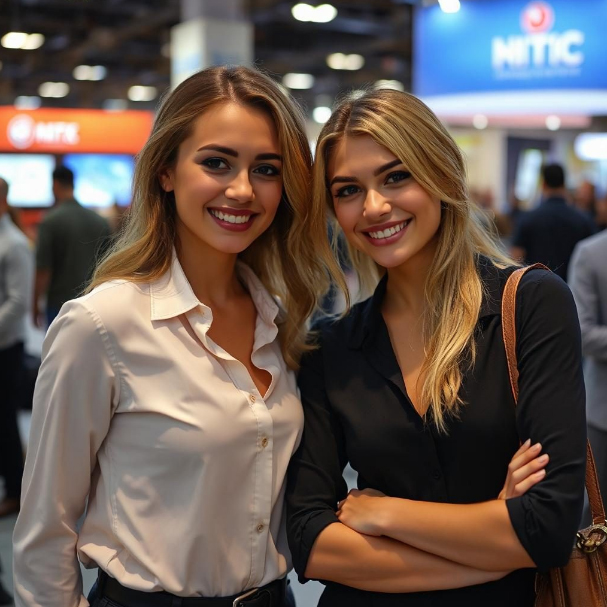
At international trade fairs, hostesses and promotional models fulfill a distinct but related function. They provide the polished, professional welcome that sets the tone for a company’s presence. Their responsibilities often include greeting visitors, distributing promotional materials, managing appointment schedules, and creating a welcoming atmosphere that encourages visitors to linger.
The Tashkent exhibition ecosystem has developed a robust market for these professionals. Agencies maintain talent pools of individuals experienced in trade show environments, ready to be activated when projects arise. The best hostesses and models combine presentable appearance with practical skills: the ability to communicate clearly, manage crowds gracefully, and remain composed during the busiest periods of the exhibition day.
For companies exhibiting at Automechanika Tashkent, the decision of whether to engage hostesses or models depends on their objectives. Some exhibitors prioritize language capabilities and product knowledge, selecting individuals who can serve dual roles as both hostess and information provider. Others prefer to have dedicated promotional staff who focus solely on creating a welcoming environment while technical staff handle substantive discussions.
Practical Considerations for Exhibitors
For companies planning to participate in Automechanika Tashkent 2026, securing the right supporting professionals requires advance planning. The most capable interpreters and stand assistants are often booked well ahead of major exhibitions.
The organizational ecosystem in Tashkent is structured around established exhibition organizers who work with networks of service providers. Opportunities for assistants often flow through personal networks and agency relationships rather than open job boards. Freelancers who perform well on one assignment are called back for the next.
Exhibitors should consider their specific needs carefully. A company launching a new product line may prioritize promotional models and energetic hostesses. A company focused on technical sales of automotive components may place greater emphasis on interpreters with automotive vocabulary and stand assistants who can engage in substantive discussions. National pavilions hosting multiple companies under one umbrella often benefit from shared interpretation services that manage costs while ensuring effective communication across delegations.
As Automechanika Tashkent continues to grow as the leading platform for the automotive industry in one of the world’s most dynamically developing markets, the professionals who support exhibitors on the ground will remain essential. Interpreters, stand assistants, hostesses, and models collectively form the human infrastructure that transforms an exhibition space into a functioning commercial environment. For companies seeking to make meaningful connections in the Uzbek and Central Asian automotive market, investing in these professionals is not merely a matter of convenience—it is a strategic necessity.