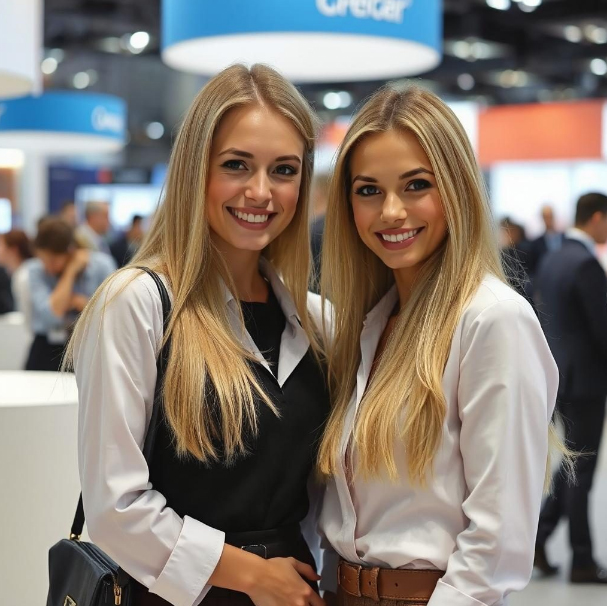
The Tashkent International Healthcare Exhibition—TIHE—has stood as Uzbekistan’s premier medical industry gathering since 1995. Held annually at venues including CAEx Uzbekistan and UzExpoCentre, the exhibition brings together hundreds of companies and thousands of medical professionals from across the globe. But behind every booth and every business conversation stands a workforce that rarely receives recognition: the interpreters, stand assistants, hostesses, and models who keep the event functioning.
A Medical Exhibition with Global Reach
TIHE 2026, the 30th anniversary edition held from April 28 to 30, featured more than 300 companies and brands from 20 countries, including Germany, India, China, South Korea, the United States, Turkey, and others. National pavilions from Germany, India, China, and Latvia were presented, alongside collective expositions from Belarus and the Russian Federation.
The scale of the event is substantial. The exhibition covered 12,000 square meters of gross space and attracted 8,410 unique visitors from 36 countries, with a total of 11,354 visits. More than 75 percent of participating companies were international, and 35 percent were first-time participants.
For exhibitors—particularly those traveling from abroad—this creates a practical challenge. A medical equipment manufacturer from Germany or a pharmaceutical company from India cannot simply set up a booth and wait for visitors. They need local staff who can communicate, present, and facilitate conversations across language barriers.
Interpreters: Bridging Medical and Commercial Language
Among the most critical roles at TIHE is that of the interpreter. The exhibition attracts participants from multiple countries, and business conversations involve specialized terminology: medical device specifications, pharmaceutical regulations, clinical data, and commercial terms.
Job listings for exhibition interpreters in Tashkent reveal what employers expect. A typical posting for a Chinese company at a Tashkent exhibition specified a three-day assignment with the primary responsibility of facilitating bilingual communication between the client and booth visitors, described as serving as “a professional bridge for business dialogues.” Candidates were required to pass an online test and sign a non-disclosure agreement before working.
The language combinations in demand at TIHE reflect the exhibitor profile. Chinese, Russian, German, Korean, and English are all needed depending on the company’s origin. With national pavilions from Germany, India, China, and Latvia, interpreters who can move fluidly between these languages have a distinct advantage.
Medical specialization matters significantly. Interpreters working at TIHE need more than general language skills. They must be comfortable with terminology related to diagnostic equipment, surgical instruments, laboratory analyzers, pharmaceuticals, and healthcare IT solutions. The ability to accurately convey technical specifications and regulatory details can mean the difference between a productive conversation and a missed opportunity.
Stand Assistants: The Operational Backbone
While interpreters handle language, stand assistants manage the booth’s daily operations. These are the people who greet visitors, collect contact information, distribute materials, and ensure that the exhibitor’s time is spent on the most promising leads.
At an exhibition like TIHE, where more than 8,000 visitors move through the halls over three days, stand assistants serve as the first point of contact. They need to quickly assess whether a visitor is a potential buyer, a medical professional, a competitor, or simply curious—and direct them accordingly.
The work is demanding. Exhibition days run long, the floor is crowded, and energy must remain high. For international exhibitors, a capable stand assistant is not a luxury but a necessity. Without one, valuable conversations are lost and opportunities slip away.
Hostesses and Models: Presentation with Purpose
The hostess and model roles at TIHE occupy a distinct space in the exhibition workforce. A recent job posting for exhibition work in Tashkent, listed under the category of “models for hostess work,” outlined specific requirements and duties.
The posting specified women aged 18 to 25, at least 165 centimeters tall, with polished appearance and competent speech. Duties included presenting companies and products, registering guests, communicating with visitors, and participating in briefings. Knowledge of Uzbek and English was welcomed, while Russian was mandatory.
The pay range for these temporary exhibition roles has been listed between 700 and 900 USD for short-term assignments, with some listings showing 900 to 1,100 USD. For a few days of work, this represents competitive compensation—though the requirements are strict and the work is not merely decorative.
The distinction between hostess and model at these events is often blurred. In practice, the role combines elements of both: presenting a polished image for the brand while also performing functional tasks like registration and guest communication. Some agencies in Tashkent specialize in providing models and hostesses for exhibitions and corporate events, maintaining rosters of talent that can be deployed for specific projects.
What Employers Actually Want
Across all these roles, consistent requirements emerge.
Language skills top the list. Russian remains essential for most positions, reflecting its status as a lingua franca in the region. English is increasingly important, particularly for international exhibitors. Uzbek is a plus, as is any additional language that matches an exhibitor’s home country.
Presentation matters. The job posting for hostess work explicitly listed “polished appearance” and “competent speech” as requirements. This is not about vanity—it is about brand representation. An exhibitor’s booth staff are the face of the company, and that face needs to project professionalism and approachability.
Stamina and adaptability are essential. Exhibition work is physically demanding and mentally taxing. Conversations move quickly, problems arise, and the ability to stay calm and focused throughout a long day is non-negotiable.
A Market That Runs on Networks
For those interested in working at TIHE, opportunities often flow through networks rather than open job boards. Agencies maintain talent pools. Freelancers who perform well on one assignment get called back for the next. Organizers like Iteca Exhibitions, which has operated in Uzbekistan since 1995, work with a network of service providers who can staff events at short notice.
The trade show assistant market in Tashkent has grown alongside the exhibition sector itself. With events like TIHE, TextileExpo, and INNOPROM Central Asia filling the calendar, there is consistent demand for skilled exhibition personnel. For assistants, this means that a strong performance at one event can lead to opportunities at the next.
For exhibitors, the calculus is straightforward. The cost of hiring a capable interpreter or stand assistant is small compared to the investment in travel, booth construction, and marketing materials. A well-briefed local staff member can mean the difference between a productive exhibition and an expensive missed opportunity.
TIHE will continue to grow. The 31st edition is already scheduled for April 20 to 22, 2027, at UzExpoCentre. And as the exhibition expands, so too will the demand for the people who make it work—the interpreters, assistants, hostesses, and models who stand at the intersection of global healthcare business and local expertise.