DoKomi has grown from a small fan gathering in a school gymnasium to Germany’s largest anime, manga, and Japanese pop culture convention, drawing a record 230,000 visitors to Messe Düsseldorf in 2026. What began in 2009 with just 1,800 attendees has evolved into one of Europe’s most significant fan events, now occupying eight halls and the Congress Center Süd across 235,000 square meters. Behind this extraordinary growth lies an ecosystem of exhibitors—from global figure manufacturers like Good Smile Company to independent artists and food vendors—who depend on professional staff to navigate the unique demands of a convention where fandom, commerce, and cultural exchange converge.
Understanding DoKomi’s Distinctive Character
DoKomi is not a traditional trade fair. Its audience is passionate, knowledgeable, and deeply engaged with Japanese pop culture. Visitors arrive in elaborate cosplay, spend hours exploring artist alleys, and seek authentic experiences—whether purchasing exclusive merchandise, meeting like-minded fans, or discovering new aspects of Japanese culture. The 2026 edition, held May 29–31, featured a “Solarpunk” motto and welcomed over 400 commercial exhibitors alongside 1,700 fan booths.
The fair operates across three days with distinct rhythms. Friday opens at 1:00 PM, while Saturday and Sunday begin at 10:00 AM, with indoor access available from 8:00 AM on weekend mornings. Evening programming extends well beyond closing hours, with the Cosplay Ball running until 2:00 AM on Saturday and the J-Rave celebrating its 15th anniversary with an additional Friday event. This extended schedule demands staff who can maintain energy and professionalism across long, intense days.
The international character of DoKomi is unmistakable. Exhibitors from Japan, Korea, and across Europe participate, while attendees travel from throughout the continent. The presence of the Japanese Consul General at the 2026 opening ceremony underscored the fair’s cultural significance and its role in strengthening German-Japanese relations.
The Roles That Drive Exhibitor Success
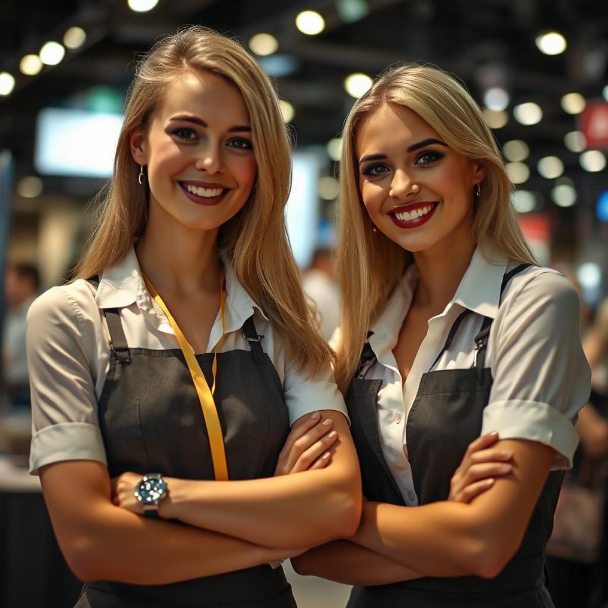
Hostesses at DoKomi serve as the welcoming face of exhibition stands, greeting visitors, managing information points, and creating an atmosphere that encourages engagement. For a convention where attendees are often shy about approaching booths or have specific questions about limited-edition products, a friendly, knowledgeable hostess can transform a casual passerby into a committed customer. Staffing agencies emphasize that hostesses at DoKomi must not only present professionally but also understand the cultural context—recognizing references, appreciating cosplay, and engaging authentically with fans.
Booth assistants provide essential operational support throughout the three-day event. Their responsibilities include material handling, stock replenishment, and booth organization—critical tasks at a convention where popular items can sell out within hours and where maintaining an orderly display directly impacts sales. For exhibitors in the artist alley or merchandise halls, reliable assistants ensure that creators and sales staff can focus entirely on customer interaction rather than logistics.
Booth models bring visual appeal and promotional energy to product presentations. At DoKomi, where competition for attention is fierce and visual presentation matters enormously, models can demonstrate products, pose for photos, and create the kind of engaging presence that draws crowds. Some exhibitors seek “Modelhostessen”—professionals who combine visual presentation with the communication skills of a hostess, capable of both attracting visitors and explaining product features effectively.
Interpreters bridge language barriers that are particularly pronounced at a Japanese pop culture convention. Exhibitors from Japan often require German-English-Japanese language support to communicate with European distributors, conduct business discussions, or assist fans with product inquiries. Staffing agencies serving Messe Düsseldorf maintain networks of multilingual personnel, with German and English as baseline requirements and additional languages—including Japanese, Korean, and Chinese—available for specialized needs.
Specialized Skills for a Unique Event
The requirements for DoKomi staff differ meaningfully from those at traditional trade fairs. Cultural affinity for Japanese pop culture provides significant advantage—staff who understand anime, manga, and gaming can engage more authentically with attendees and anticipate their interests. This cultural knowledge also helps staff navigate the convention’s unique atmosphere, where enthusiasm runs high and interactions often extend beyond simple commercial transactions.
Language proficiency remains critical. DoKomi attracts visitors from across Europe and exhibitors from Asia, creating demand for staff fluent in German, English, and additional languages. For Japanese exhibitors, the ability to communicate in their native language provides essential comfort and efficiency, particularly for smaller companies without established European operations.
Physical stamina and adaptability are essential given DoKomi’s scale and intensity. With 230,000 visitors across three days—averaging around 75,000 per day—staff must maintain energy and professionalism throughout long shifts in a crowded, high-energy environment. The convention’s extended evening events further test endurance, requiring staff who can sustain focus from morning setup through late-night programming.
Cultural sensitivity is particularly important at DoKomi. The convention celebrates Japanese popular culture, and staff must approach this with respect and genuine interest. Exhibitors and attendees alike appreciate personnel who engage with the material authentically rather than treating it as merely another promotional assignment.
The Business Case for Professional Staffing
For exhibitors at DoKomi, professional staff protect significant investments. Commercial exhibitors pay for booth space, transportation of merchandise, and often international shipping for products from Japan. Fan booth operators—many of whom are independent artists or small creators—invest in materials, production, and travel with the hope of connecting with their audience. In both cases, the quality of stand personnel directly influences whether that investment generates returns.
Trained hostesses and models who understand the brand can capture more qualified leads, conduct meaningful conversations, and create positive impressions that translate into sales and lasting customer relationships. At a convention where attendees document their experiences extensively on social media, positive interactions with staff can generate organic promotion that extends far beyond the event itself.
For international exhibitors, local staff provide essential navigation of German market conditions and cultural expectations. A Japanese company introducing products to European fans benefits enormously from staff who can communicate in German, understand local consumer behavior, and represent the brand with appropriate professionalism.
Practical Considerations for Exhibitors
Staffing agencies serving Messe Düsseldorf offer German-speaking hostesses with English proficiency starting from approximately €180 per day for up to nine hours, with three-day bookings including travel costs at around €540. Rates vary based on qualifications, additional language skills, and specific requirements.
DoKomi’s location at Messe Düsseldorf provides good accessibility via the U78 tram line to the North entrance or U79 to the South entrance, with shuttle buses connecting parking areas. For exhibitors arranging staff accommodation, note that hotel prices in Düsseldorf can rise significantly during major events, and early booking is advisable.
Looking Ahead
As DoKomi continues its remarkable growth trajectory—more than tripling attendance between 2022 and 2026—the demand for professional, culturally aware stand staff will only increase. The fair’s 2027 edition is scheduled for July 9–11, moving to a summer date that will present new challenges for staff and attendees alike.
For exhibitors planning their DoKomi presence, the lesson is clear: the right team of interpreters, booth assistants, hostesses, and models is not merely a staffing expense—it is a strategic investment in connecting authentically with one of Europe’s most passionate and engaged fan communities. These professionals are the face of the brand, the voice of the product, and the essential bridge between Japanese pop culture and its European audience.