Conclusion First: IAS – Industrial Automation Show China 2027 is confirmed for September 20–24, 2027, at the National Exhibition and Convention Center (NECC) in Shanghai, held as a core professional exhibition within CIIF. This is a purely technical B2B automation fair where interpreters must handle PLCs, servo systems, robotics, and industrial software terminology. Hostesses manage high-volume professional reception across a five-day event with over 200,000 expected visitors. Booth assistants coordinate demonstration logistics and heavy technical materials. Models serve a minimal visual function and are rarely justified compared to interpreter and assistant investment.
The Event Context
IAS is organized by Hannover Milano Fairs Shanghai and is held under the umbrella of the China International Industry Fair (CIIF), the national-level industrial exhibition founded in 1999. The 2027 edition follows a pattern of steady growth: the 2026 IAS exhibition covered 65,899 square meters with 655 exhibitors and 223,997 professional visitors, with overseas exhibitors representing 50%–60% of the total.
The exhibition scope covers manufacturing and process automation, electrical systems, robotics, industrial automation IT and software, and microsystems technology. Attendees are production engineers, plant managers, system integrators, procurement specialists, and manufacturing decision-makers from automotive, electronics, semiconductors, and general manufacturing. Conversations involve control architecture, motion control specifications, vision inspection tolerances, and Industry 4.0 integration—not consumer products or brand storytelling.
Interpreters: Engineering Vocabulary Is Non-Negotiable
A general English interpreter at IAS is a liability. An interpreter who cannot distinguish between a PLC and a PC-based controller, or who hesitates when a buyer asks about cycle time or repeatability tolerances, damages the exhibitor’s credibility with engineers who evaluate suppliers on precision.
What the role demands: Brief the interpreter on the exhibitor’s specific product line before arrival. Key terminology includes: control systems (PLC, DCS, SCADA, HMI), motion control (servo, stepper, linear motor, precision reducer), sensing (vision systems, encoders, force sensors, proximity sensors), communication protocols (EtherCAT, Profibus, OPC UA, Modbus), and robotics (payload, reach, repeatability, end-of-arm tooling, collaborative safety). If the exhibitor serves electronics manufacturing, precision and speed vocabulary takes priority. If the focus is process automation, instrumentation and loop control terminology matters.
Market context: Rates for technical interpreters at Shanghai industrial exhibitions typically range from 1,000 to 1,500 RMB per day for English, with premiums for German, Japanese, or Korean where European or Japanese suppliers and buyers require it. Given the technical density of IAS conversations and the presence of major international exhibitors, engaging an interpreter with engineering background experience is essential. A technically unprepared interpreter signals a lack of seriousness to production managers who evaluate suppliers on specification accuracy.
Hostesses: Managing Professional Reception at Scale
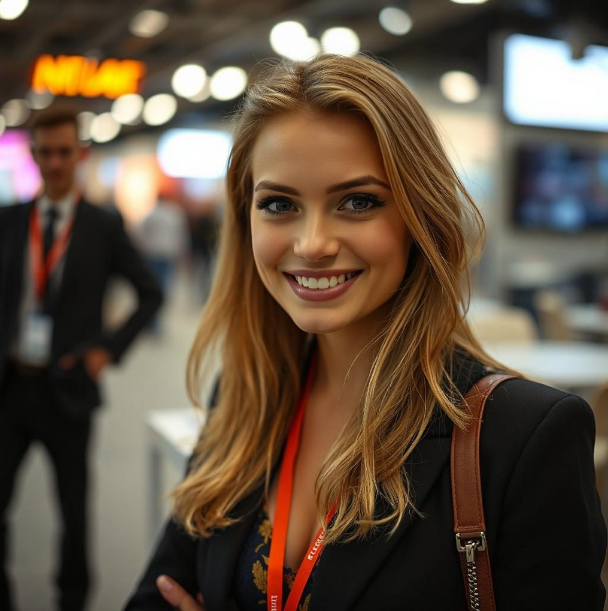
IAS spans five days with over 200,000 professional visitors expected across the CIIF platform. The hostess role here is professional reception and visitor qualification, not crowd attraction. The booth front line must handle sustained traffic, determine whether visitors are qualified buyers or general attendees, collect contact information, and direct serious technical inquiries to the appropriate salesperson or interpreter without losing information.
What works: A hostess who can politely qualify visitors (“Are you sourcing for a production line upgrade, or researching the market?”), manage the flow of business cards and inquiry forms, and maintain composure through long exhibition days. Bilingual capability in English and Chinese is valuable for international exhibitors. For an industrial fair, organizational discipline and reliability matter more than high-fashion presentation. A hostess who loses a business card or cannot manage a queue is worse than no hostess at all.
Market rates: Shanghai exhibition hostess positions are commonly listed at approximately 300–500 RMB per day for standard reception roles, with official service providers quoting around 800 RMB per person per day for managed assignments. For IAS, prioritize candidates who can stay professional through five consecutive exhibition days over appearance premiums.
Booth Assistants: Managing Demonstration Flow and Technical Materials
Automation exhibitors bring substantial physical materials: servo motors, controller units, sensor samples, heavy catalogs, and technical datasheets. Booth assistants handle the logistics that keep technical conversations running—restocking literature, organizing sample displays, managing business card collection, and coordinating with venue services during live demonstrations.
Why they matter at IAS: A servo motor sample is not a brochure. It needs to be displayed securely, retrieved when an engineer asks to inspect a specific model or specification, and returned to its proper position afterward. An assistant who understands that a precision component is not a paperweight, and who can locate the correct technical datasheet when a production manager asks about a specific model, directly supports the sales team’s effectiveness. During live demonstrations, assistants manage crowd flow, distribute literature, and ensure that interested buyers are connected with the right technical staff.
Budget benchmark: General booth support roles at Shanghai venues advertise at approximately 180–300 RMB per day, with English-capable staff commanding higher rates. Brief the assistant on product categories, sample organization, and demonstration schedules before the fair opens. Given IAS’s five-day duration, reliability and stamina matter as much as language capability.
Models: Minimal Role in a Technical B2B Environment
IAS is not a consumer-facing exhibition. There are no finished consumer products to display on models, no retail packaging to present, and no general public to attract. Models, if used at all, serve a narrow function: standing beside large equipment displays or robot demonstration areas to provide scale during peak traffic periods.
Practical application: A model might be positioned near a robotic arm or a large controller cabinet to draw attention during opening hours or scheduled demonstrations. The requirement is professional presentation and the ability to stand comfortably for extended periods in a busy industrial hall—not runway experience. Attire should align with the industrial atmosphere: professional, understated, and consistent with the exhibitor’s corporate identity.
Budget consideration: Shanghai promotional modeling rates for exhibition work range from approximately 200 RMB per hour for display roles upward, with premium commercial modeling commanding higher day rates. For a technical automation fair like IAS, the return on a dedicated model is limited compared to investment in interpreter quality and booth assistant reliability. Most exhibitors will find that a well-briefed hostess or booth assistant can cover the visual presentation function without a dedicated model.
Budgeting Summary for 2027 Planning
| Role | Estimated Shanghai Rate | Priority at IAS 2027 |
|---|---|---|
| Technical Interpreter | 1,000–1,500 RMB/day | Highest priority; engineering vocabulary essential |
| Hostess / Reception | 300–800 RMB/day | Professional qualification and high-volume reception |
| Booth Assistant | 180–300 RMB/day | Sample and demonstration logistics |
| Model | 200+ RMB/hour | Minimal use; only if visual display requires it |
Practical advice for IAS exhibitors:
- Book interpreters early. IAS runs within CIIF, which draws exhibitors from 20+ countries and regions. Demand for English, German, Japanese, and Korean interpreters peaks in September. Secure technically qualified interpreters weeks in advance.
- Test interpreter vocabulary during hiring. Ask candidates to explain the difference between a PLC and a DCS, or to describe the function of a servo drive. A fluent interpreter who cannot handle these basics will not serve an engineering audience.
- Scale hostess coverage to hall traffic. IAS’s 65,000+ square meters and 220,000+ visitors mean sustained booth traffic. A single hostess cannot manage peak hours alone across five days. Plan coverage for the full exhibition period.
- Brief booth assistants on sample handling and demonstration schedules. Industrial samples are heavy and often delicate. An assistant who understands how to handle a precision component or coordinate a live demonstration directly supports the sales team’s productivity.
- Reserve models only if the display genuinely requires visual scale. For most IAS exhibitors, the staffing budget is better spent on a stronger interpreter and a reliable booth assistant than on a model who stands beside a machine.
IAS rewards technical credibility above all else. The exhibitors who generate business are not the ones with the most visually striking booth staff, but the ones whose technical conversations flow without misunderstanding. That flow depends on an interpreter who knows the product, a hostess who manages reception professionally, and an assistant who ensures the right sample reaches the right engineer. Staff the fair with the same precision you apply to your control systems, and IAS becomes a productive commercial platform rather than an expensive display.