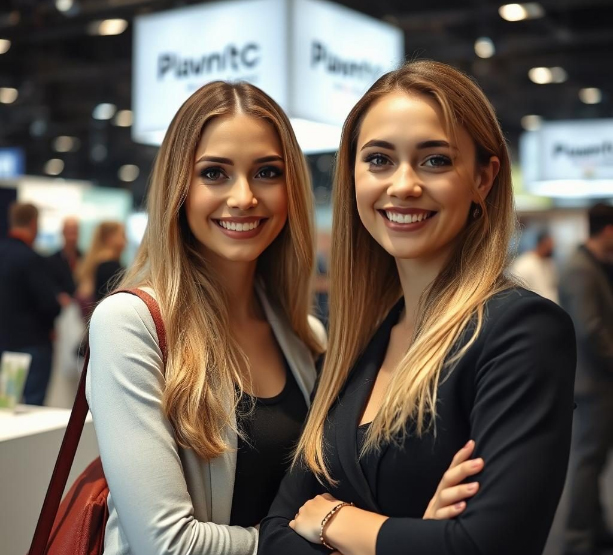
Gulfood is where the global food and beverage industry converges. The 31st edition, held January 26–30, 2026, made history as the first trade event to operate simultaneously across two mega-venues: the Dubai World Trade Centre and the Dubai Exhibition Centre at Expo City Dubai. The show expanded to 240,000 square meters, hosted over 8,500 exhibitors from 195 countries, and displayed more than 1.5 million products. Nearly 500 Chinese companies participated, showcasing products across food, beverage, and industrial solutions. Behind the product displays, the tasting stations, and the cross-border negotiations, a temporary workforce makes international business possible: interpreters, booth assistants, hostesses, and models.
A Show Built for Global Food Trade
Gulfood is not a regional exhibition. It is the first major sourcing event of the global F&B calendar, setting the industry’s strategic direction for the year. The show’s scale is unprecedented. The dual-venue format, a first in global food trade history, created a seamlessly connected universe enabling buyers to source finished goods, fresh categories, commodities, national pavilions, and next-generation technologies in a single journey. The 2026 edition attracted 116,520 professional buyers from 190 countries.
For a Chinese food manufacturer meeting a Middle Eastern distributor, a Brazilian meat exporter negotiating with a European retailer, or an Indian spice company presenting to an African buyer, the ability to communicate across languages is the precondition for a deal. The Middle East, Africa, and South Asia region imported over $1.1 billion in food and beverage products from Sri Lanka alone in 2024. Every one of those transactions began with a conversation.
Interpreters: Bridging the Language of Food Trade
The interpreter’s job at Gulfood spans commercial and technical domains. A buyer examining a frozen food product needs to discuss cold chain logistics, shelf life, and certification standards. A distributor evaluating a functional ingredient needs to understand health claims, regulatory compliance, and formulation compatibility. A retailer examining a private label opportunity needs to discuss minimum order quantities, packaging options, and delivery timelines.
The show’s exhibitor profile shapes the demand for specific languages. With 195 countries represented, the language requirements are extraordinarily diverse. Arabic is essential for engaging Gulf Cooperation Council buyers. English serves as the common commercial language. Chinese-English interpretation is in constant demand given the strong presence of Chinese exhibitors, including the 37 Qingdao food companies that collectively secured over $4.6 million in intended orders at the 2026 edition.
The preparation for Gulfood interpretation begins weeks before the show. An interpreter working with a Chinese condiment manufacturer needs to learn product terminology like “soy sauce,” “oyster sauce,” and “fermented bean curd,” while also understanding halal certification requirements and Gulf market preferences. An interpreter supporting a dairy exporter needs to discuss pasteurization methods, shelf stability, and lactose content. The vocabulary is both commercial and technical, and it shifts with every exhibitor.
Booth Assistants and Hostesses: The Operational Backbone
The booth assistant and hostess roles at Gulfood combine visitor engagement, operational support, and professional presentation. The hostess serves as the first point of contact for visitors approaching a stand, offering catalogs, collecting business cards, directing inquiries to the appropriate salesperson, and maintaining the visual order of the booth.
The work at Gulfood is demanding in ways that other trade fairs are not. The show runs for five days across two venues connected by shuttle service. Booth staff may work at either the Dubai World Trade Centre, which hosts the traditional categories of beverages, dairy, meat, and poultry, or the Dubai Exhibition Centre, which features national pavilions, bulk commodity trade, and government delegations. The dual-venue format requires stamina and adaptability.
For Chinese exhibitors specifically, the booth assistant role often blends reception with translation support. A Chinese booth assistant who can handle basic English greetings and direct Arabic-speaking visitors to the appropriate staff member is performing a critical triage function. At a show where a single exhibitor may receive hundreds of visitors over five days, the assistant’s ability to identify serious buyers and route them efficiently directly affects how many meaningful conversations the sales team can have.
Models: Visual Presentation as Commercial Argument
Food is a sensory industry. The visual appeal of a product, the presentation of a tasting station, the arrangement of a display: these are commercial arguments in their own right. Models at Gulfood serve as living product demonstrations, standing beside display cases, offering samples, and creating the visual anchor that draws buyers into the booth.
The show’s programming reinforces the importance of visual presentation. The 2026 edition featured a strong emphasis on health, function, and technology integration, with products like mate tea positioned as “the new matcha,” mushrooms including reishi and lion’s mane incorporated into beverages and snacks, and protein-fiber combinations targeting weight management. Presenting these products effectively requires staff who can both embody the brand’s health positioning and engage with visitors.
The Preparation That Makes the Difference
The most revealing insight into this workforce comes from the exhibitors themselves. Chinese companies participating in Gulfood report that halal certification has shifted from a compliance requirement to a core competitive strategy, with organic certification, clean labeling, and full traceability becoming key selling points. This shift has direct implications for booth staff and interpreters: they need to understand not just the products but the certification frameworks that determine market access.
For interpreters, preparation means learning product lines, memorizing technical vocabulary, and understanding the commercial objectives of the exhibitors they support. For booth staff, preparation means familiarizing themselves with the exhibitor’s product range and the specific questions international buyers are likely to ask. At a show where a single food product may be compared against competitors from a dozen countries, the ability to articulate advantages clearly—in the right language, with the right commercial vocabulary—is the difference between a lead and a lost opportunity.
Why This Workforce Matters at Gulfood
Gulfood describes itself as the world’s largest annual food and beverage sourcing event, a platform that connects producers, exporters, and buyers while fostering innovation and facilitating trade. That platform function depends on human connection. The show’s official materials emphasize its role in “unlocking new high-growth sectors, major partnerships and a transformative focus on AI and food-economy intelligence.” Those partnerships are built through conversations: a buyer tasting a sample, a model demonstrating a product, an interpreter explaining a certification, a hostess guiding a visitor to the right booth.
The interpreters, booth assistants, hostesses, and models are not the headline of Gulfood. The headline is the 8,500 exhibitors, the 240,000 square meters, the 1.5 million products and the dual-venue expansion that made global trade history. But the headline only reaches its audience because of the people who stand at the edges of the booths, offer the samples, translate the negotiations, and guide the visitors. They are the human infrastructure of the world’s largest food trade show.