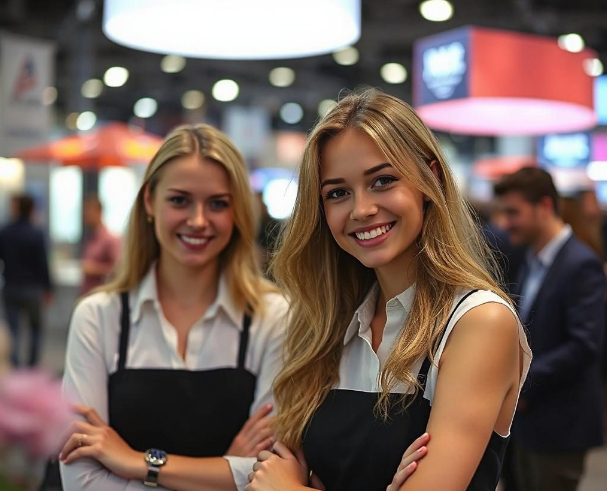
The CPE China Preschool Expo is where the future of early childhood education takes physical form. From October 21 to 23, 2026, the Shanghai New International Expo Centre will host over 2,700 exhibitors across four concurrent trade shows, drawing more than 110,000 professional visitors, including an estimated 12,000 overseas buyers. Behind the Montessori materials, STEAM kits, and kindergarten furniture, a temporary workforce makes the international business of early education possible: booth assistants, hostesses, and interpreters.
The Scale That Demands Human Infrastructure
CPE is not a niche gathering. Organized by the China Toy & Baby Products Association, it holds the distinction of being the only preschool education exhibition approved by China’s Ministry of Commerce to carry the “China International” designation. The 2026 edition occupies all exhibition halls of the Shanghai New International Expo Centre — 230,000 square meters — and runs alongside the China Toy Expo, China Licensing Expo, and China Baby Products Expo.
The audience is not casual. It includes kindergarten principals, early education franchise operators, daycare center founders, distributors, and cross-sector investors from cultural tourism and commercial real estate. For international brands like Guidecraft, HABA, Beleduc, and Weplay exhibiting alongside Chinese leaders such as Qisehua and Omoun, every conversation on the floor has commercial weight.
What Booth Staff Actually Do at CPE
The roles at CPE mirror the broader trade show staffing model, but with specific demands shaped by the education sector. The most common temporary positions include booth assistants (hostesses) and bilingual reception staff.
According to recruitment materials for comparable Shanghai exhibitions, English reception staff are expected to handle “bilingual reception, consultation, communication and coordination in various foreign-related scenarios,” as well as “on-site guidance, registration coordination, and basic service support” for overseas buyers, exhibitors, and media. Booth assistants more broadly are tasked with greeting visitors, providing information, distributing materials, collecting leads, and maintaining booth organization.
For CPE specifically, the product knowledge required is unusual. A booth assistant at a plastics show needs to recognize an extruder. At CPE, the products are Montessori sensorial materials, STEAM construction kits, kindergarten furniture, picture books, and teacher training services. The learning curve for temporary staff is real, even if the technical depth is less than in industrial sectors.
Interpreters: Bridging the Language of Early Education
CPE’s international ambitions are explicit. The show positions itself as a platform for overseas brands entering China and Chinese brands going global. A dedicated “Global Expansion — Overseas Buyer Trade Matchmaking” session connects exporters with international buyers. That function depends on interpreters.
The language profile at CPE differs from industrial fairs. English remains the baseline, but the buyer geography — Southeast Asia, Europe, and increasingly the Middle East — means demand for other languages exists. In parallel recruitment for plastics and rubber exhibitions, Chinese-Spanish interpreters were sought with preference for experience in “exhibitions, business negotiations, machinery equipment, plastics, packaging, or industrial translation.” For CPE, the equivalent preference would be experience in education, toys, children’s products, or licensing — sectors where vocabulary and cultural nuance matter.
Published rates for exhibition interpreters at major Shanghai shows range from 500 RMB per day for basic English-capable reception staff to higher tiers for specialized or less common languages. The pricing reflects both scarcity and the commercial stakes. An interpreter who can accurately translate a licensing discussion between a European IP holder and a Chinese toy manufacturer is not performing a commodity service.
The Skills That Separate Competent from Adequate
Recruitment materials for booth staff consistently emphasize a specific profile. English reception roles require “fluent English, able to skillfully complete barrier-free bilingual communication.” For more demanding interpreter positions, the requirements include the ability to “understand foreign customers’ accented English” and “accurately repeat, translate, and record customer needs.”
Beyond language, the personal attributes matter. Listings call for “outgoing and proactive personality, strong stress resistance, high execution ability, not stage-frightened.” The work is not passive. Booth staff are expected to “actively approach and receive passing foreign buyers, proactively communicate, not passively wait.”
Industry guidance on trade fair staffing identifies the core functions: hosts and hostesses act as “brand ambassadors,” drawing attention, distributing materials, and guiding visitors to the right people or content. Effective staff share recognizable traits: positive attitude, physical energy, outgoing personality, good listening skills, and the ability to communicate concisely. Training should cover product knowledge, engagement techniques, and the specific objectives of the exhibition.
The Economics of Temporary Staff
CPE exhibitors face the same calculation as any trade show participant: the cost of temporary staff against the value of the conversations they enable. General booth staff in comparable Shanghai exhibitions earn in the range of 200-500 RMB per day, depending on language capability and responsibilities. Bilingual interpreters command higher rates. For a small kindergarten furniture brand testing overseas interest for the first time, a competent English-speaking booth assistant may be the difference between a wasted booth fee and a signed distribution agreement.
The work is physically demanding and mentally repetitive. A typical day runs from 8:30 to 17:00, with requirements for full attendance and strict adherence to on-site scheduling. Staff must maintain professional composure through hours of standing, navigating crowded halls, and repeating the same product explanations to different visitors. The recruitment language — “immediate response to on-site work needs,” “obedience to unified scheduling” — signals that flexibility and reliability are valued above all.
Why This Workforce Matters at CPE
The China Preschool Expo is ultimately a marketplace of ideas about how young children learn. The products on display — a wooden puzzle, a coding robot, a teacher training curriculum — carry educational philosophies. Communicating those philosophies across languages and cultures requires more than a catalog translation.
A German HABA representative explaining the developmental rationale behind a board game to a Chinese kindergarten principal needs an interpreter who understands both early childhood pedagogy and the Chinese education market. A Chinese STEAM kit manufacturer meeting a Southeast Asian distributor needs booth staff who can present the product as a solution, not just a box of parts.
The booth assistants, hostesses, and interpreters at CPE are not the headline. The headline is the 5,600 brands, the 2,700 IPs, the AI+ intelligent ecosystem zone that signals where the industry is heading. But the headline only reaches its audience because of the people who stand at the edges of the booths, hold the materials, staff the counters, and translate the conversations that turn a display into a deal.