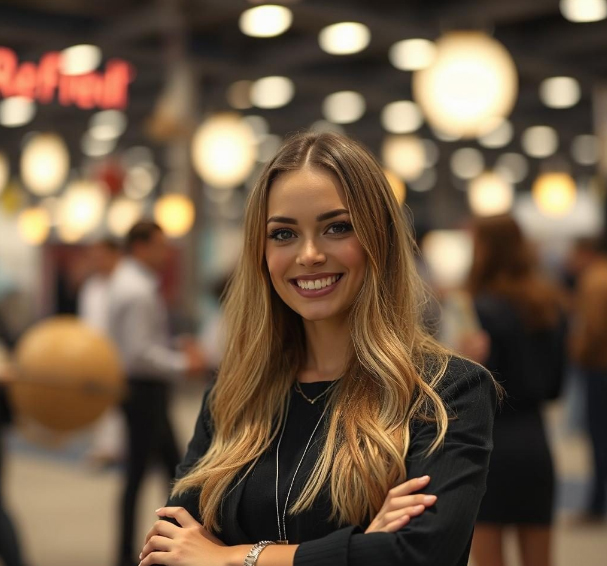
The 21st Shanghai International Hosiery Purchasing Expo (CHPE 2027) is scheduled for March 22–24, 2027, at the Shanghai World Expo Exhibition & Convention Center. As a flagship vertical event for the hosiery industry, it is expected to draw nearly 500 exhibitors and approximately 30,000 professional buyers from around the world. For exhibitors, the difference between a busy booth and a productive one often comes down to the quality of the front-line team. This article outlines the roles, expectations, and practical considerations for interpreters, models, hostesses, and booth assistants at CHPE 2027.
Interpreters: Bridging the Language Gap
Hosiery is a global business, and CHPE attracts buyers from Europe, North America, Asia, and beyond. A skilled interpreter does more than translate words; they convey technical specifications, negotiate terms, and build trust between parties who do not share a language.
At major trade fairs in Shanghai, English interpretation typically ranges from 800 to 1,200 RMB per day, with rates climbing for less common languages or specialized industry knowledge. Interpreters working at CHPE should be briefed in advance on hosiery-specific terminology—denier, gauge, yarn composition, knitting techniques, and compliance standards—so they can speak with confidence rather than hesitation. A good interpreter listens for the intent behind a buyer’s question, not just the literal phrasing, and knows when to ask a clarifying question rather than guess.
Exhibitors should book interpreters well before the show. On-site hiring is unreliable, and the best candidates are often committed weeks in advance. It is also worth arranging a short pre-show briefing, either in person or online, to walk through product lines and common buyer objections.
Models: Visual Merchandising in Motion
Hosiery is a tactile, visual product. Models at CHPE serve a merchandising function: they show how a product fits, moves, and catches the light. Unlike fashion runway modeling, trade fair modeling is closer to live product demonstration. A model may stand at the booth entrance wearing a featured collection, walk a short loop through the aisle to draw attention, or pose for buyer photographs that later circulate on social media.
The requirements are practical rather than glamorous. Comfortable shoes matter, because a model may be standing for six or more hours. The ability to hold a natural, approachable expression while being photographed dozens of times is a skill in itself. Models should also be briefed on what they are wearing—the yarn, the brand, the key selling point—so that if a buyer asks a question, they can either answer briefly or direct the buyer to a sales representative.
Rates for models at Shanghai exhibitions vary widely, from roughly 750 RMB per day at the entry level to significantly higher for experienced professionals with portfolio-ready presentation skills. For hosiery specifically, a model who understands how to display legwear—the angle of a foot, the drape of a sock—adds tangible value beyond appearance alone.
Hostesses: The First Point of Contact
A hostess at a trade fair is often the first person a visitor meets. That first interaction sets the tone for everything that follows. The role is frequently misunderstood as purely decorative; in practice, a good hostess is an information gatekeeper, a traffic manager, and a brand representative rolled into one.
At CHPE, hostesses will be responsible for welcoming visitors, scanning badges, distributing catalogs, collecting contact information, and managing the flow of people into and out of the booth. They need to distinguish between a curious passerby and a serious buyer within seconds, and they need to do so politely. When a buyer asks a question the hostess cannot answer, the correct response is not a guess but a smooth handoff: “Let me introduce you to our sales manager, who can give you the full details.”
The standard appearance expectations at Chinese trade fairs are explicit: professional attire, neat hair, and natural makeup are common requirements. Rates for hostesses at major Shanghai exhibitions generally start around 750 RMB per day and can reach 1,500 RMB for high-profile events. Exhibitors should provide clear instructions on dress code, booth layout, and escalation procedures before the show opens.
Booth Assistants: The Operational Backbone
Booth assistants are the least visible but most essential members of the team. They handle the logistics that keep the booth running: restocking brochures, checking sample inventory, coordinating with venue staff, managing queues, and running errands between halls. Without them, sales staff get pulled away from buyers to deal with operational problems.
The work is physically demanding. A booth assistant may walk several kilometers in a single day across the exhibition hall. They need to be punctual, organized, and calm under pressure. At Chinese trade fairs, booth assistant pay is modest—often in the range of 200 to 300 RMB per day for general support roles, with higher rates for those who speak English or have relevant industry experience.
For CHPE specifically, a booth assistant who understands the product categories can be invaluable. If they know the difference between a compression sock and a fashion tight, they can help organize samples, direct buyers to the right display, and flag when a particular sample needs to be retrieved from storage. This kind of familiarity is not always available at entry-level rates, but a brief training session before the show can close much of the gap.
Building a Cohesive Team
The most successful exhibitor teams at CHPE are not simply a collection of individually competent people. They are coordinated. The hostess knows which buyers the sales manager wants to meet. The interpreter knows which product lines are the priority. The model knows when to rotate outfits and when to step aside so a buyer can examine a sample closely. The booth assistant knows where everything is and who to ask when something goes wrong.
This coordination does not happen by accident. It requires a pre-show briefing, a clear chain of command, and a designated team leader—often the exhibitor’s own marketing or sales manager—who can make decisions on the floor. Agencies that supply trade fair staff can provide a chief hostess or team leader for larger bookings, but the exhibitor’s own team must remain in charge of priorities and messaging.
Practical Considerations for CHPE 2027
Exhibitors planning their staffing should start early. The best interpreters and experienced hostesses are booked months in advance, particularly for a specialized vertical show like CHPE. It is also worth confirming language requirements in detail: a buyer from Germany may prefer to negotiate in German even if their English is fluent, and an interpreter who can handle technical German in a hosiery context is a different proposition from a general English speaker.
Contracts should specify working hours, breaks, dress requirements, and payment terms. Chinese labor regulations and fair venue rules may impose restrictions on consecutive working hours, and a tired team on day three is a liability rather than an asset.
Finally, exhibitors should resist the temptation to over-staff. A small, well-briefed team that knows the products and works smoothly together will outperform a larger group of disconnected individuals. At a show like CHPE, where the aisles are crowded and attention is scarce, the quality of every conversation matters more than the number of people standing at the booth.
CHPE 2027 runs from March 22 to 24 at the Shanghai World Expo Exhibition & Convention Center. Exhibitors who invest in the right people—and prepare them properly—will find that the three days pay for themselves many times over.