Automechanika Astana is the leading automotive aftermarket exhibition in Central Asia and the Caspian region. Licensed by Messe Frankfurt and organized by Business Media Central Asia, the 2026 edition marked its tenth anniversary as the largest in its history, bringing together 421 companies from 23 countries and welcoming 15,076 visitors from 47 nations. The exhibition occupied more than 14,235 square meters at the EXPO International Exhibition Center in Astana, expanding beyond the pavilions into adjacent outdoor space. National pavilions from China, Uzbekistan, and Iran reinforced the event’s international scale. Behind the displays of auto parts, diagnostic equipment, lubricants, and service technologies, a specialized workforce makes international business possible: models, interpreters, stand assistants, and hostesses.
Hostesses and Stand Assistants: The First Point of Contact
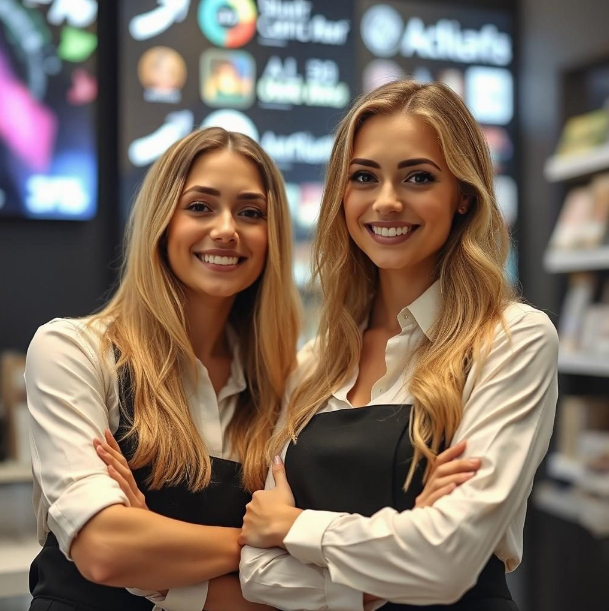
Hostesses serve as the welcoming face of exhibition stands at Automechanika Astana. Their primary function is to greet visitors, create a positive first impression, and initiate conversations that can lead to deeper engagement with the brand’s representatives.
At Automechanika Astana, the hostess role carries particular weight because of the professional and international nature of the visitor base. The exhibition attracts distributors, service station operators, dealership networks, procurement managers, and government representatives from across Kazakhstan, Central Asia, and beyond. A warm, professional welcome sets a tone that reflects the brand’s organizational competence.
Language proficiency is a key requirement for hostesses working at the EXPO International Exhibition Center. Russian fluency is essential for engaging the majority of visitors, while Kazakh proficiency is a valuable additional asset. English proficiency—even at a basic level—is increasingly sought after by international exhibitors. With the 2026 exhibition hosting national pavilions from China, Uzbekistan, and Iran, and participants from countries including Germany, UAE, South Korea, and India, hostesses who can communicate across multiple languages provide direct value.
Stand assistants at Automechanika Astana perform the functional work that keeps exhibition booths productive. Their responsibilities include registering visitors, collecting contact information, distributing technical brochures, managing visitor flow, and directing inquiries to the appropriate sales or technical staff. For automotive aftermarket brands, stand assistants often perform a qualification function. A visitor approaching a booth may be a regional distributor, a service station owner, a fleet operator, or a journalist. A skilled stand assistant can quickly assess visitor intent and route them appropriately, allowing sales directors and technical experts to focus on high-value conversations.
Models: Visual Anchors for Automotive Brands
Automotive aftermarket exhibitions differ from consumer-facing motor shows in their emphasis on B2B products and technical solutions. The displays at Automechanika Astana feature auto parts, diagnostic tools, and workshop equipment rather than gleaming supercars. Yet models still play a meaningful role at the event, though their function is more subdued and professional than at consumer shows.
At Automechanika Astana, models typically serve as image and promotional representatives for automotive brands, particularly those showcasing consumer-facing products such as car care products, accessories, or customization services. They stand beside product displays, engage with visitors, and help draw attention in exhibition halls where hundreds of booths compete for visibility.
The role of models at trade shows has become more professionalized. At Automechanika Astana, models are expected to present professionally and direct serious business inquiries to technical or sales staff. For brands launching new product lines or seeking to project a modern, innovative image, professional models contribute to the overall impression of a well-organized enterprise.
Interpreters: Bridging the Technical Divide
Automechanika Astana’s international stature makes interpreters indispensable. With exhibitors from over 20 countries and visitors from across Central Asia and the Caspian region, the event is a global meeting point for the automotive aftermarket. For international companies demonstrating automotive technology in the Kazakhstani market, and for regional distributors seeking global partnerships, interpretation services facilitate commercial negotiations and technical discussions.
The linguistic demands at Automechanika Astana are substantial. Automotive terminology requires precision: engine component specifications, diagnostic system capabilities, lubricant formulations, and service equipment parameters must be rendered accurately. Interpreters working the exhibition floor must be comfortable with technical vocabulary spanning auto parts, repair equipment, and emerging mobility technologies.
The interpreting work at Automechanika Astana spans multiple formats. During the business program—which included 14 panel sessions and Automechanika Academy events in 2026—consecutive and simultaneous interpreting facilitates knowledge exchange between international experts. On the exhibition floor, consecutive interpreting becomes the primary mode—interpreters accompany brand representatives, facilitate conversations with potential distributors, and help international visitors understand complex technical offerings.
Official travel services for Automechanika Astana participants explicitly include the services of guides, interpreters, and simultaneous translators, recognizing that international exhibitors require linguistic support beyond basic translation. For a delegation from Zhejiang Province, China, that met with Messe Frankfurt, Business Media Central Asia, Kazakh Invest, Astana Invest, and the Kazakhstan Automobile Union during the 2026 exhibition, professional interpretation was essential to productive discussions.
Practical Considerations for Exhibitors
Exhibitors planning staff for Automechanika Astana should recognize that these roles serve distinct functions and require different skill sets. Hostesses and stand assistants need operational reliability and crowd management abilities, along with multilingual capabilities in Russian, Kazakh, and English. Models need to combine professional presentation with basic product familiarity. Interpreters require specialized automotive vocabulary and business communication skills.
The recruitment process for major brands typically involves casting calls for models and hostesses, while interpreters and stand assistants may be sourced through staffing agencies or professional networks. Astana has an established market of agencies providing hostesses, promotional models, and event staff for exhibitions and business events.
Budget planning should account for the full duration of the exhibition, which spans three days from 10:00 to 18:00. The investment in staff quality directly affects brand perception at an event where the visitor base consists primarily of professionals who evaluate exhibitors on organizational competence as much as product quality.
Automechanika Astana represents the largest automotive aftermarket gathering in Central Asia and the Caspian region. The professionals who staff its booths—models, interpreters, stand assistants, and hostesses—are not peripheral to the experience. They are the human interface between automotive technology and the global professionals who come to evaluate, negotiate, and partner.
Automechanika Astana 2026 was held June 10–12 at the EXPO International Exhibition Center in Astana, Kazakhstan. The next edition is scheduled for April 14–16, 2027.