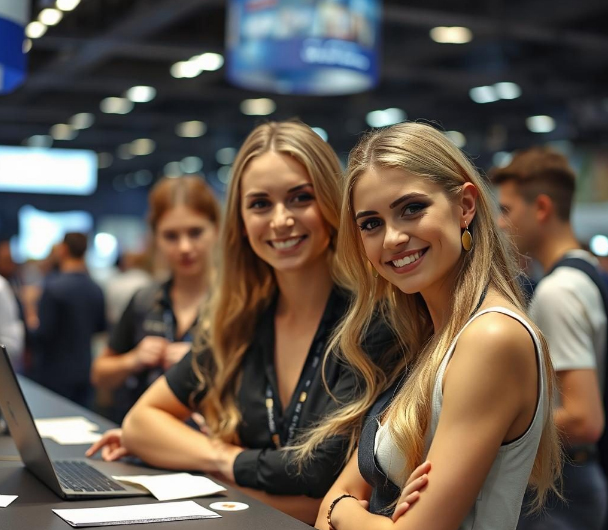
Agritechnica, the world’s leading trade fair for agricultural machinery, transforms Hanover into a global hub of agricultural innovation every two years. With over 2,800 exhibitors from 52 countries and more than 430,000 visitors expected, the sheer scale of this event is staggering. Yet behind every successful exhibitor booth, there exists a carefully assembled team of professionals whose contributions often go unnoticed by the casual observer: booth assistants, hostesses, models, and interpreters.
The Frontline of International Business
At a trade fair where nearly 68 percent of exhibitors come from outside Germany, the ability to communicate effectively across languages and cultures becomes paramount. Booth hostesses serve as the first point of contact for visitors, greeting guests at the stand, conducting qualified conversations in both German and English, and facilitating connections to technical experts.
The requirements for these positions reflect the demanding nature of the work. Agencies emphasize that candidates must possess a representative appearance and confident, professional demeanor, with fluent German and English being non-negotiable. Additional languages are considered advantageous, given the international composition of both exhibitors and visitors. The minimum age requirement of 21 for some positions underscores the level of professionalism expected.
Beyond Reception: The Multifaceted Role
Modern booth assistants at Agritechnica perform far more than simple greeting duties. Their responsibilities encompass visitor registration, distribution of informational materials, booth tours, product presentations, and even social media documentation. For exhibitors with hospitality areas, service staff manage beverage service, coordinate with caterers, and ensure VIP guests receive appropriate attention.
The physical demands of the role should not be underestimated. With trade fair days running from 9:00 AM to 6:00 PM across seven consecutive days, stamina and resilience become critical attributes. Service agencies explicitly note that successful candidates must possess the ability to maintain professionalism even during long trade fair days with many contacts.
Models and Promoters: Visual Representation of Brands
While the term “model” in a trade fair context may evoke images of glamour, the reality at Agritechnica is considerably more practical. Promotional models are engaged for product presentations, promotional activities, and visual representation of brands. Their role combines aesthetic presentation with active engagement—distributing materials, facilitating lead generation, and creating memorable experiences for visitors.
For agricultural machinery exhibitors, the models and promoters must project an image consistent with their brands: professional, approachable, and knowledgeable enough to engage with a technically sophisticated audience. Smart casual or branded clothing is the norm, with comfortable practical attire recommended given the vast exhibition grounds.
Interpreters: Bridging the Language Divide
Perhaps the most technically demanding role falls to interpreters. At a fair where exhibitors hail from countries including Germany, Italy, China, Turkey, and the Netherlands, the need for seamless communication spans multiple languages. While hostesses may perform basic translation tasks, dedicated interpreters provide conversational translation services without the additional responsibilities of reception or promotional duties.
The distinction matters. Trade fair interpreters focus exclusively on facilitating communication between parties who share no common language. Their expertise ensures that technical discussions about agricultural machinery, digital farming solutions, and component specifications proceed without linguistic barriers.
The Demand for Agricultural Knowledge
A unique aspect of staffing at Agritechnica is the value placed on agricultural familiarity. Exhibitors consistently express preference for staff who understand the industry context—whether it be crop production, livestock management, or agricultural technology. Student assistants from agricultural universities often fill these roles, bringing both theoretical knowledge and enthusiasm to their interactions with visitors.
This agricultural literacy allows booth staff to engage more meaningfully with the professional audience. When a visitor inquires about variable rate application systems or autonomous field robots, a staff member with agricultural background can facilitate a more substantive conversation than one relying solely on scripted responses.
The Logistics of Large-Scale Staffing
Coordinating staffing for an event of Agritechnica’s magnitude requires significant lead time. Agencies recommend engaging personnel 10 to 12 weeks in advance, as demand for qualified staff is correspondingly high given the fair’s enormous visitor numbers. Many agencies maintain backup systems and rotation models to ensure booth coverage remains uninterrupted throughout the event, even in cases of illness or emergency.
The hourly rates for trade fair personnel vary based on qualifications and language skills. Hostesses without foreign language capabilities command lower rates than those with multiple languages, with interpreters earning premium compensation for their specialized skills.
A Symbiotic Relationship
The success of Agritechnica depends on a complex ecosystem of professionals working in concert. The agricultural machinery manufacturers bring innovations that shape the future of farming. The booth staff—hostesses, models, assistants, and interpreters—bring these innovations to life for the international audience that gathers in Hanover.
For exhibitors, investing in professional booth personnel represents more than a logistical necessity; it is a strategic decision that directly impacts brand perception and lead generation. For the professionals themselves, Agritechnica offers the opportunity to work at the highest level of agricultural technology, engaging with cutting-edge developments in a truly international environment.
As the agricultural industry continues to embrace digitalization, automation, and sustainability, the role of effective human communication at trade fairs remains irreplaceable. Behind every successful booth at Agritechnica stands a team of skilled professionals who transform a display of machinery into an experience of connection, understanding, and opportunity.