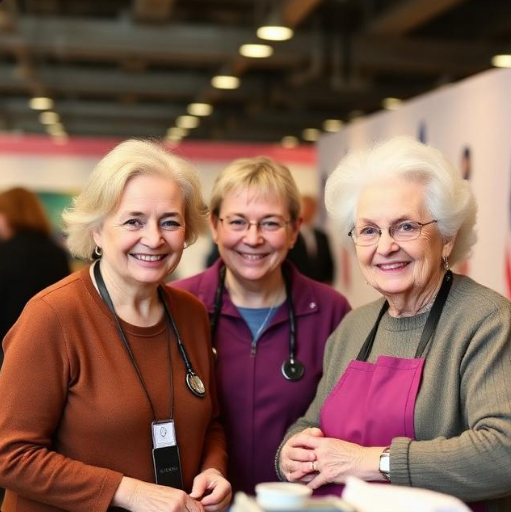
Russia’s elderly care industry is undergoing a profound transformation, driven by demographic shifts and a state-led push to modernize a system once defined by institutional care and family obligation. As the population ages and societal attitudes evolve, the industry is expanding rapidly, blending traditional state institutions with new private services, community initiatives, and a professionalizing medical workforce.
A Demographic Imperative
The demand for elderly care services is accelerating as Russia’s population structure shifts. By 2030, the share of citizens older than working age is expected to reach 30% of the total population. This demographic trend is reshaping the market, which analysts project will grow from approximately USD 1,017 billion in 2025 to nearly USD 2,166 billion by 2034, representing a compound annual growth rate of 8.75%.
The scale of the challenge is reflected in the nation’s existing infrastructure: Russia currently operates over a thousand inpatient facilities for adults, including 514 state-run nursing homes and 536 psycho-neurological institutions, collectively housing about 300,000 permanent residents. However, demand now extends well beyond institutional walls.
Modernization Through State Programs
The Russian government has prioritized elderly care as a key pillar of social policy. Active longevity programs, designed to engage older people in education, sport, and creative activities, now reach over 15 million people across all regions. According to Deputy Prime Minister Tatyana Golikova, “The key priority is care for the older generation… allowing them to lead active lives, socialise with their peers and with younger generations.”
The long-term care system is a central focus. Today, such support covers more than 184,000 people, with an emphasis on enabling care in the familiar home environment. New social technologies are being rolled out, including “hospital at home,” “foster family for the elderly,” and “respite care” programs. Over the past six years, federal support has funded the opening of 77 new social care institutions with a combined capacity exceeding 8,000 people.
Professionalizing Medical Care
A significant development is the formalization and expansion of geriatric medicine. In 2016, Russia approved a procedure for providing medical care in the field of geriatrics, establishing a three-level system: outpatient clinics with geriatricians, hospital departments for severely ill patients, and regional coordinating centers.
New regulations implemented in January 2026 mandate that large hospitals must have specialized consultation rooms, with one geriatrician per 400 beds. Yet, a severe staffing shortage persists. According to Olga Tkacheva, Russia’s Chief Freelance Geriatric Specialist, the current need for geriatricians is 4,000 specialists, while only half that number are currently practicing. To bridge this gap, intensive training programs have begun at more than 30 departments in regional medical universities.
The Growing Private Sector
The private elderly care market is also expanding rapidly, fueled by changing social attitudes. A 2021 NAFI survey found that 93% of Russians considered placing a relative in a nursing home unacceptable under any circumstances. By 2024, that figure had dropped to 41%, with 40% now willing to consider institutional care if the facility provides quality services.
This shift reflects both demographic pressures and an increasingly diverse market. In St. Petersburg and the Leningrad region, the number of private nursing homes grew from fewer than 30 in 2012 to 165 by 2020. However, costs remain a barrier. A typical room in a reputable private facility in Moscow or St. Petersburg costs around 100,000 rubles per month, while specialized dementia care can exceed 5,000 rubles per day. Most families cannot afford these rates and instead rely on state-run facilities where residents contribute up to 75% of their pension, with the budget covering the rest.
New entrants are bringing innovation to the sector. In 2026, Sergey Krivosheev, founder of the pharmacy chain 36.6, launched a new service combining home care and a digital platform. The service offers psychological support, adaptive gymnastics, and help with organizing safe living spaces, with costs starting from 10,700 rubles for four hours of care. According to the project team, the Russian market for elderly and low-mobility care services is estimated at approximately 250 billion rubles, though about 88% of such services remain outside the official sector.
Civil Society and Charitable Initiatives
Non-governmental organizations are playing an increasingly important role. The Russian Red Cross operates Houses of Mercy, all-day care facilities that combine professional medical assistance with personalized emotional support. Over the last four years, more than 850 elderly and disabled people have received assistance through these facilities in the Kamchatka Krai, Belgorod, and Vologda regions.
In 2026, the Russian Red Cross launched new projects, including “Longevity Rooms” across 41 regional branches and “Healthy Longevity Schools” in 62 regions. These initiatives focus on health assessments, physical activity, disease prevention, and cognitive maintenance, with the Longevity Rooms alone expected to support at least 9,200 people. The organization is also expanding its Family Care School program, aiming to train at least 36,000 people in basic caregiving skills across 74 regions.
A Mixed Model Emerges
The transformation of Russia’s elderly care system is moving away from a state and family monopoly toward a mixed model involving multiple providers: NGOs, businesses, foster families, specially equipped apartments, and private nursing homes. In practice, care is often “layered,” with relatives, public services, non-profits, and paid staff simultaneously caring for the same person. This expanding repertoire of care scenarios increases agency and choice for older people, while creating new opportunities—and challenges—for service providers.
Outlook
Russia’s elderly care industry stands at a pivotal moment. Demographic trends are driving demand, state policy is modernizing infrastructure and medical training, and private sector innovation is diversifying options. Yet the system faces persistent challenges: a chronic shortage of trained geriatricians, high costs that limit access to private care, and the need to professionalize a sector still dominated by informal arrangements. The path forward depends on whether Russia can translate its substantial state investments and growing market interest into a sustainable, accessible, and high-quality elderly care ecosystem for its aging population.