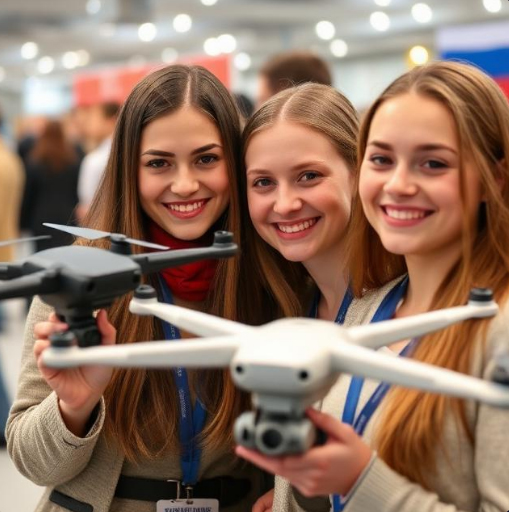
The Russian drone industry has undergone a transformation so rapid that it defies the broader trajectory of the country’s wartime economy. While tank production hits capacity limits and civilian output contracts, unmanned aerial vehicles have become the breakout sector—a cheap, scalable, and increasingly dominant force on the battlefield.
Production at Warp Speed
By mid-2026, Russian manufacturers had reached a production capacity of over 15,000 first-person view drones per day. To put this in perspective, this is a roughly 30-fold increase from 2023, when that same quantity represented an entire month’s output. Ukrainian intelligence estimates that Russia plans to manufacture 7.3 million FPV drones and 7.8 million warheads for various drone types in 2026 alone.
The broader aviation industry, which includes both manned aircraft and UAVs, saw production surge by 117% in April 2026 compared to the previous year. This represents a sharp acceleration from the average annual growth rate of 68% recorded in 2025. By contrast, Russia’s overall defense industry expanded by just 16% in the first four months of 2026, while civilian industrial output actually contracted by 3% amid weakening demand and mounting sanctions pressure.
The Strategic Logic
Drones have become central to Russia’s military strategy for several reasons. First, they are significantly cheaper than traditional weapons, require fewer resources to produce, and scale easily—from small workshops to large enterprises operating under government contracts. Long-range UAVs have allowed Moscow to supplement its limited inventory of cruise missiles and sustain strikes on Ukrainian infrastructure.
“First-person view UAVs are now a dominant feature of fighting on the ground, making any kind of force build up hazardous for kilometers either side of the line of contact,” said Douglas Barrie, a senior fellow at the International Institute for Strategic Studies.
The production surge underscores how Moscow is pivoting to a new economic reality in its war with Ukraine. With the production and effectiveness of tanks and other conventional armor hitting limits, drones have become one of the few areas of Russian industry still capable of rapid expansion.
Attack Drone Expansion: The Geran Family
Russia is not only scaling production but also diversifying its drone arsenal. Ukrainian intelligence reports that Russia plans to manufacture 11,000 attack drones in August 2026 alone, spanning multiple variants including Geran-1 through Geran-5, Garpiya, and several Gerbera models.
A notable shift is underway toward turbojet-powered drones, particularly the Geran-4 and Geran-5 models. In one recent attack, these faster drones accounted for 50% of the UAVs used. This technological upgrade is driven by necessity—Russia has partially reduced attack intensity in July to reconfigure production lines toward these more advanced systems.
However, the turbojet pivot comes with its own challenges. Russia remains dependent on China for the supply of jet engines, each costing around $35,000–$40,000. This dependency highlights a vulnerability even as production volumes soar.
Copying and Scaling
Russia has shown a remarkable ability to copy Ukrainian drone innovations and quickly scale them for mass production. While Ukraine typically leads in initial technological development, Moscow has proven effective at replicating advancements and scaling them across its military-industrial base.
The Russian military has narrowed the gap in unmanned systems employment in part by scaling elite UAV units and developing new concepts of use, though these advances have yet to produce a decisive battlefield breakthrough.
Civilian Drones: A Tightening Regulatory Grip
While the military drone sector explodes, Russia’s civilian drone landscape is defined by increasingly strict regulation. Since 2019, all drones weighing between 0.25 kg and 30 kg must be registered with the Federal Air Transport Agency within 10 business days of purchase or import.
The regulatory framework has been tightened further in response to security concerns. In June 2026, temporary flight restrictions were imposed on civil drones across central Russia, covering Moscow and surrounding regions up to an altitude of 5,200 meters. Violations can result in fines up to 50,000 rubles for individuals and 300,000 rubles for legal entities.
These restrictions reflect a growing tension: the civilian drone market, valued at an estimated $1.16 billion in 2025 and projected to reach $1.69 billion by 2030, must contend with security imperatives that increasingly limit its operational freedom.
Outlook
The Russian drone industry is a testament to wartime adaptation. It has demonstrated that a sanctions-hit economy can still achieve extraordinary production surges when strategic priorities align. Yet the sector’s dependence on foreign components—particularly Chinese engines for advanced models—and the broader economic constraints weighing on Russian industry suggest that sustaining this momentum will be an ongoing challenge.
As one analyst put it, drones have allowed Russia to sustain a campaign that its cruise missile inventory alone could not. Whether this drone surge can translate into strategic advantage, or merely prolong a grinding war of attrition, remains the critical question.